
Order of Works in a Singapore Renovation: Which Trade Goes First, and What Breaks When the Sequence Is Wrong
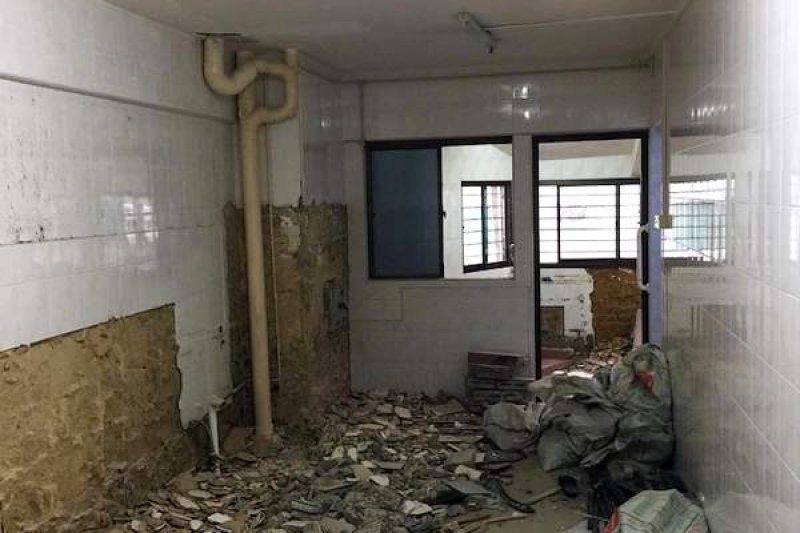
Pictured above: a kitchen stripped out at the start of a job, from our project archive (140PP). Debris on the floor, walls hacked to brick. Everything in this article happens after this point, in a fixed order.
Most owners ask a contractor three things: how much, how long, and who does the carpentry. Almost nobody asks what order the trades go in. Yet the order is what decides whether the job finishes in the quoted weeks, whether the new floor gets scratched on day 40, and whether you pay to open a finished ceiling because nobody settled where the aircon pipe goes.
This is the sequence on a typical HDB flat, why each step waits for the one before it, and the points where owners most often break it without knowing.
The order we publish, week by week
On our HDB renovation page we set out the programme for a full renovation. It is a guide rather than a promise, because the flat decides: the same page says 3-room flats take around 6 weeks, 4-room around 7 to 8 weeks, and 5-room or executive flats 8 to 10 weeks, with a longer job for a resale flat that needs a lot of hacking. The order itself is the part that does not change:
- Week 1: hacking and demolition. Tiles, walls and fixtures that are going come out.
- Weeks 2 to 3: masonry, plumbing and electrical. New walls, floor screed, pipe rerouting and wiring.
- Weeks 4 to 5: waterproofing, tiling and ceiling. Waterproofing in the wet areas, floor and wall tiling, false ceiling installation.
- Weeks 6 to 7: carpentry installation. Kitchen cabinets, wardrobes and the custom furniture.
- Week 8: painting, cleaning and handover. Final touches and the walkthrough with you.
HDB also caps the renovation period at three months from the start date, which is the outer limit that a messy sequence runs into first.
Why it runs in that order
The logic is not mysterious, and once you see it you can test any contractor's programme against it. There are three rules underneath.
Rule 1: dirty before clean. Hacking, screeding and tiling make dust, water and rubble. Painting and carpentry are the opposite. Every step that happens after a finished surface exists is a chance to damage it, so the finishes go in last and the messiest work goes in first.
Rule 2: what hides something goes in after the thing it hides. Pipes and wiring are covered by screed, tiles and ceiling boards, so they must be right, and checked, before the cover goes on. That is why electrical and plumbing sit in weeks 2 and 3, and why the waterproofing is tested before any tile is laid. Our ponding test guide covers the check in detail: on our published bathroom process it is two coats of membrane on the full floor and 1.5m up the wet walls, then a 24-hour ponding test before tiling begins. A leak found at that stage costs a repeat of the membrane. A leak found after tiling costs the tiles as well.
Rule 3: things that are made to measure wait for the surface they sit on. A wardrobe or kitchen cabinet is built to fit finished floor, finished wall and finished ceiling, so it follows tiling and the ceiling rather than leading them. Our carpentry is built in our own factory, which helps with timing, but the factory still has to build to the room as it will actually be.
Four ways the sequence gets broken
1. Hacking is split across weeks
The hacking block is not just a programme item. Demolishing walls and removing wall or floor finishes has to be completed within three consecutive days, and it cannot be done on Saturdays, Sundays or public holidays. Our noise rules article sets out the full hours. The effect on order is simple: all the hacking is planned as one block at the start. If you change your mind in week 3 and want a wall removed after all, you are no longer adjusting a plan, you are asking for a second demolition event, with the neighbour and permit consequences that come with it.
2. The aircon positions are decided after the ceiling closes
The false ceiling in week 4 or 5 is where the aircon piping, downlight wiring and access panels end up hidden. Positions have to be settled before the ceiling board goes up, because deciding afterwards usually means reopening it. Our article on aircon points during an HDB renovation covers what HDB says about installation and why the compressor position and electrical load should be confirmed first. The practical point here is that your aircon vendor needs to be talking to the contractor before week 4, not after handover.
3. The electrical work has no named worker
HDB requires a licensed electrical worker (LEW) for electrical work in your flat. Our article on electrical work explains why the renovation licence is a different thing, and that on completion you apply to SP Services for testing through your LEW. That test belongs at the end of the electrical stage, not as an afterthought at handover when the lights already switch on and nobody is looking.
4. Carpentry is drawn before the choices around it are final
Kitchen carpentry is built around the appliances that go into it, and wardrobes around the finished floor level. If the appliance model, the tile or the floor finish is still undecided when the carpentry drawing is signed, the drawing is wrong by construction, and the fix comes in week 6 when everything else is already finished. Choices that carpentry depends on need to be locked before drawings are signed, which in practice means before the first week begins.
What to ask for before you sign
You do not need to understand every trade to protect yourself. You need the sequence on paper, and a few specific answers.
- A programme by week, in writing. Not "about two months". Which trade is on site in which week, and what date the whole job ends. Compare it to the five stages above. If a stage is missing or out of order, ask why.
- The hacking dates. Which three consecutive weekdays, and what the scope is. If anything about the walls is still undecided, decide it now.
- The ponding test, and who sees it. The day the membrane goes down, the day the test starts, and whether you can look at it before tiling is booked.
- The name and licence number of the licensed electrical worker. And when the testing application goes in.
- The decision deadlines. The date by which you must finalise aircon positions, appliance models, tile, floor finish and lighting positions. A good contractor can give you these dates, because the programme produces them.
- Who else is coming on site. Aircon installer, curtain maker, glass supplier or appliance delivery: which week each one may come in, and who is responsible if they mark a finished surface.
Fitting in your own vendors
Many owners hire the aircon installer, the curtain maker or the glass supplier separately. That is entirely workable, but it adds trades that the contractor does not control. Two practical rules help. First, give each vendor a window rather than a day: aircon before the ceiling closes for the pipe route, then the indoor units after painting; curtains after painting; loose furniture after the handover inspection. Second, put each vendor's contact in the contractor's hands early, so the site is not discovering them on the day.
Inspect before the clean, not after
The last stage is also where the sequence matters most to you. A professional clean hides scratches and water marks, and your furniture hides the walls behind it. The order that protects you is to inspect, list the defects, have them fixed, and then clean and move in. We cover it in the handover inspection guide.
What to do this week
- Write down the five stages above and ask your contractor for the same list with dates against each.
- List every decision that other trades depend on: appliance models, tile, floor finish, aircon positions, lighting positions. Put a date next to each.
- Ask for the hacking dates, the ponding test date and the name of the licensed electrical worker, in writing.
Not sure whether the programme you have been given makes sense? WhatsApp us on 9107 2601 with your property type, estate and flat type, and we will go through the order of works with you and arrange a site visit if you want one. Larry Contractors is an HDB Licensed Renovation Contractor, HB-09-5667H. The full scope of what we do in an HDB flat is on our HDB renovation page.