
Hack Everything or Keep What Works: What Is Worth Retaining in an Older Singapore Flat
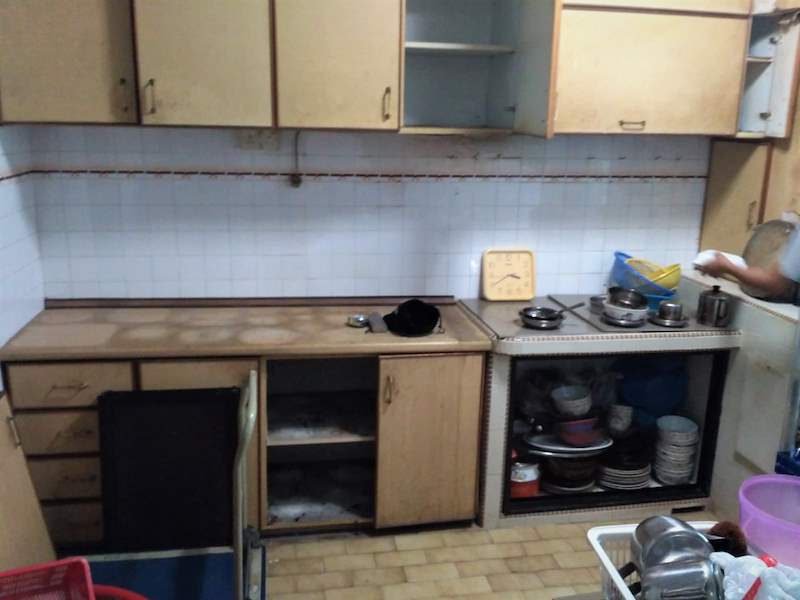
Walk into most resale flats with a contractor and the default answer is the same: hack everything. New floor, new tiles, new carpentry, new ceiling, start from a clean unit. It is a real option and sometimes it is the right one. But it is also the easiest thing to quote, the fastest thing to build, and the most expensive thing to buy — and nobody is obliged to take it just because it arrived first.
Keeping things is harder work than replacing them. Retaining a floor means protecting it for eight weeks. Retaining a bathroom means somebody has to inspect it honestly rather than assume. Retaining carpentry means matching new to old, which is fiddly and easy to get wrong. That difficulty is genuinely why "hack all" is the default — not because it is always better for you.
Here is how we actually decide, item by item, and the two or three places where keeping is false economy no matter how sound it looks.
The four questions that settle it
Before any specific item, the same four questions apply, in this order:
- Is it sound? Not "does it look acceptable" — is it structurally and functionally sound, checked rather than assumed. A hollow tile, a soft patch of ceiling, a tap that has been dripping for a year.
- Does keeping it cost less than replacing it? Often it does not. Careful removal, protection, patching and making good is labour, and labour is the expensive half of a renovation. Where the material is cheap and the fiddly work is not, replacing wins.
- Will it look wrong next to the new work? The most common regret is not a failure — it is a kept item that now reads as the odd one out because everything around it changed.
- What happens if it fails in year three? The real question is not whether it survives the renovation but what it costs to reach it afterwards. Anything that will be buried under new work has to be judged on that basis alone.
Floors: the biggest single decision
Floor tiles are usually the largest hacking item in a flat, and there are three honest options rather than two.
Hack and re-lay. The clean answer. It is also the noisiest, dustiest and heaviest part of the job, and the one that produces the most debris — which is a real cost line, not a rounding error, and worth reading about in our note on renovation debris and disposal.
Overlay. Laying vinyl or new tile over the existing floor. Cheaper, quieter, faster. The trade-offs are real and specific: the finished floor level rises, so every door has to be trimmed or rehung, thresholds at the bathroom and entrance change, and skirting has to be redone. Overlay also seals in whatever is underneath, so a floor that already has hollow or drummy tiles is the wrong candidate — you would be building on something that is already letting go.
Keep as is. Genuinely viable in bedrooms of a flat where the existing tiles are sound and the new scheme is not fighting them. Nobody photographs a bedroom floor. If the budget is tight, this is one of the least painful places to save, and it belongs on the same list as the other decisions in what to prioritise when the budget is limited.
The one test worth doing before deciding: walk the floor and tap it. A hollow sound over a wide area means the tile has lost its bond, and that area is a future failure whether you overlay it or not.
Bathrooms: the place where keeping is usually false economy
This is the item we argue hardest about, and it is the one where we push people towards doing it properly.
A bathroom is a tanked box. The waterproofing membrane sits under the screed and the tiles, and it either has continuity or it does not. Once it is covered, it cannot be inspected, and the only way to reach it is to take out everything above it — the tiles, the screed, the fittings and often the ceiling of the unit below when a leak has been running long enough to be somebody else's problem.
So the calculation is not "these tiles look fine". It is: if this membrane is twenty years old and it fails in year three, the cost of reaching it is the entire bathroom again plus a neighbour conversation. Against that, doing it once, now, while the flat is already empty and the trades are already there, is cheap.
The exception is a bathroom that has been properly redone recently and where you have some evidence of it. That is a keep. A bathroom of unknown age with original fittings is not.
What is usually worth keeping
Windows and grilles that still work. If the frames are sound, the sliders run and the seals are intact, there is rarely a reason to replace windows as part of a general renovation. Where they do need replacing, treat it as a separate scope with its own specialist rather than a line inside a general renovation quotation — the requirements and the workmanship are different, and it is worth asking your contractor directly who is carrying out that part and what approvals it needs before it is bundled in.
The main door and gate. Often solid, often just tired. Refinishing a door, changing the ironmongery and re-keying costs a fraction of replacing it, and a good main door is usually better made than its replacement.
Sound carpentry carcasses. This is the most underused saving in a resale flat. Wardrobes and kitchen cabinets are a box plus doors plus hardware. If the box is dry, square and not swollen at the base, new doors, new handles and new hinges give you most of the visual change for a fraction of the price. It is worth reading alongside how to choose the right carpentry, because the same logic decides both.
A false ceiling that nothing is changing above. If the lighting layout is not moving and no services are being re-routed, an intact false ceiling can stay. The moment either changes, it comes down.
What is almost never worth keeping
Old electrical, where the scope touches it. If the flat is old enough that the wiring and the distribution box are original, and the renovation adds any meaningful load — more points, an induction hob, additional aircon — that is not a place to economise. Anything electrical also has to be carried out by the right licensed trade, which we set out in the note on licensed electrical work.
Concealed plumbing of unknown age. Same logic as waterproofing: it is behind a wall, and reaching it later means breaking finishes you have just paid for. Surface-run pipework is a different case, because it can be replaced any time without damage. The distinction is worth knowing before agreeing to keep either, and the licensing side is covered in licensed plumbing work in a renovation.
Anything that will sit behind new work. This is the general rule the two above are examples of. If the item is about to be covered, the only question that matters is what it costs to reach it in five years.
The trap: deciding to keep, then changing your mind
The single most expensive outcome is not "keep" and it is not "hack". It is deciding to keep something, building around it, and then changing your mind in week five.
By then the trades have gone, the sequence has moved on, and the change means bringing a crew back for two days of work that carries the same setup and transport as two weeks. Whatever you were saving is gone, and more.
So make the keep-or-hack decisions before the contract is signed, get both versions priced, and then hold the line. Which leads to the one practical instruction in this article.
Ask for it priced both ways
Pick the two or three biggest items — usually the floor, the bathrooms and the kitchen carpentry — and ask for the quotation to show each of them as hack-and-replace and as retain-and-refresh, separately. Any contractor who works honestly can do this, and it takes an afternoon.
Two things happen when you do. You find out what the choice is actually worth, which is often not what you assumed. And you find out how the contractor prices, which is more informative than the total at the bottom — the same reason we wrote how to read and compare renovation quotations.
Be ready for the answer to go the other way, too. Sometimes retaining costs more than replacing, and a contractor who tells you that is doing their job.
The short version
Hack everything is the default because it is the easiest thing to quote and build, not because it is always right for you. Keep sound windows, a good main door, dry carpentry carcasses and an untouched ceiling. Do the bathrooms and anything concealed properly, because the cost of reaching them later is the whole job again. Tap the floor before deciding on it. Decide before you sign, get the big items priced both ways, and do not change your mind in week five.
If you have a resale flat and want a straight view on what is worth keeping, send us the property type and roughly how old it is. Message us on WhatsApp — we will tell you where the real savings are and where keeping would cost you later, whether or not you engage us. Our own details: Larry Contractors Pte Ltd, HDB Licence No. HB-09-5667H. More on how we work: direct contractor, no middleman and HDB renovation.
Also worth reading: HIP upgrading and your own renovation — if the block is due for upgrading, that changes what is worth hacking now and what is worth leaving alone.
If the older flat in question is one you have inherited rather than bought, there are two questions that come before this one - they are set out in renovating a flat you have just inherited.
If a floor has already started to lift rather than just sounding hollow, popped or hollow floor tiles: who pays, and how the repair should be done covers HDB's position on the tiles it provided and why the tiles around the popped ones matter.
Also worth reading: renovating just one bathroom: how a single-room job is quoted, permitted and scheduled