
How to Choose the Right Carpentry for Your Singapore Home
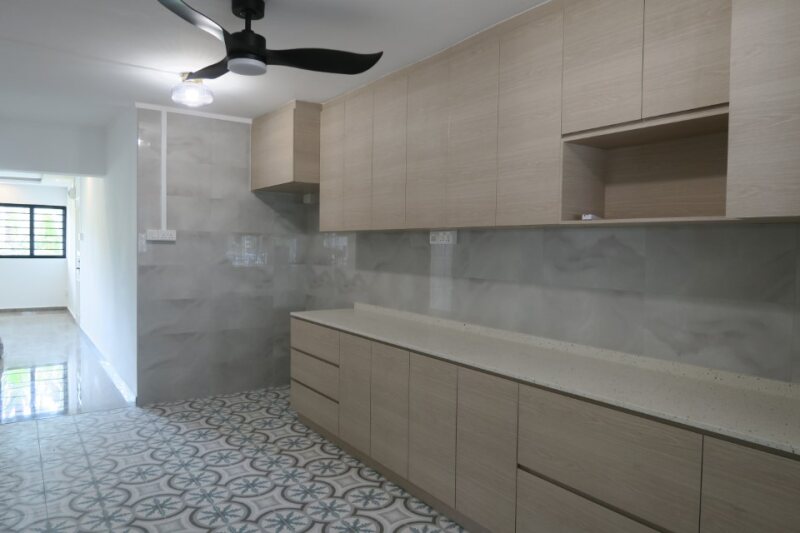
The right carpentry choice for your Singapore home depends on three factors: your property type (HDB/condo/landed affects space constraints), budget (expect $800-1,200 per linear metre for custom work), and timeline (4-8 weeks for full home). Custom carpentry offers maximum space optimisation in Singapore's compact homes, while modular systems provide faster installation at 20-30% lower cost.
Understanding Carpentry Types for Singapore Homes
Singapore homeowners have three main carpentry options, each suited to different needs and budgets. The choice significantly impacts both cost and functionality in our space-constrained homes.
Custom Built-in Carpentry
Custom carpentry is designed and built specifically for your space. Our factory at Kaki Bukit creates pieces that maximise every centimetre of your home. This option works best for odd-shaped spaces, ceiling height variations, and when you need storage solutions that standard furniture cannot provide.
Custom work typically costs $800-1,200 per linear metre for wardrobes, $600-900 per linear metre for kitchen cabinets, and $400-700 per linear metre for TV consoles. The higher cost reflects the precision required and materials wastage from cutting to exact specifications.
Semi-Custom Modular Systems
Semi-custom combines standard cabinet boxes with customised doors, handles, and internal fittings. This approach reduces costs by 20-30% while maintaining design flexibility. Most HDB and condo renovations benefit from this approach, especially for kitchens and wardrobes in standard room sizes.
Ready-Made Carpentry
Ready-made pieces are pre-manufactured in standard sizes. While cheapest upfront, they often leave awkward gaps in Singapore homes and may not comply with HDB's platform height requirements or condo MCST guidelines for noise insulation.
Material Selection Guide
Material choice affects durability, cost, and maintenance requirements. Singapore's humidity and temperature fluctuations make material selection crucial for long-term performance.
Plywood Options
Marine-grade plywood remains the gold standard for Singapore carpentry. At $180-250 per 4x8 sheet, it resists humidity and provides structural strength. We recommend 18mm thickness for structural components and 12mm for door panels.
Commercial-grade plywood costs $120-180 per sheet but may warp in Singapore's climate. It's suitable for painted finishes where slight movement won't show, but avoid it for veneer applications.
Laminate and Veneer Finishes
High-pressure laminates cost $80-150 per sheet and offer excellent durability against moisture and scratches. Popular brands like Formica and Wilsonart provide consistent quality and wide colour selections.
Natural wood veneers range from $200-600 per sheet depending on species. Oak, walnut, and teak veneers suit Singapore interiors but require skilled application to avoid bubbling in humid conditions.
| Material Type | Cost per Sheet (SGD) | Durability Rating | Best Application |
|---|---|---|---|
| Marine Plywood + Laminate | $260-400 | Excellent | Kitchen cabinets, bathrooms |
| Commercial Plywood + Paint | $150-220 | Good | Painted wardrobes, storage |
| MDF + Veneer | $280-650 | Good (with care) | Display units, low-moisture areas |
| Solid Wood | $400-1,200 | Excellent | Premium applications, feature pieces |
Budgeting for Carpentry Projects
Carpentry costs vary significantly based on property type, complexity, and material choices. Understanding these factors helps you budget accurately and avoid surprises.
Cost Breakdown by Property Type
HDB flats typically require $15,000-35,000 for full-home carpentry including kitchen cabinets, wardrobes, and storage solutions. The standardised layouts allow efficient material usage, keeping costs controlled.
Condo units range from $20,000-50,000 due to varied layouts and often higher finishing expectations. MCST requirements for sound insulation may add $2,000-4,000 to the total cost.
Landed properties start from $30,000 and easily exceed $80,000 for comprehensive carpentry. Multiple levels and larger spaces increase both material and labour requirements significantly.
Hidden Costs to Consider
Factor in 10-15% contingency for unexpected issues like uneven floors or walls. Singapore's older HDB blocks often have significant variations that require additional work to achieve proper alignment.
Hacking and disposal fees add $1,500-3,500 to renovation budgets. This covers removing old built-ins and disposing of materials according to NEA guidelines.
Touch-up and warranty visits typically cost $500-1,200 in the first year as new carpentry settles and minor adjustments become necessary.
Choosing the Right Contractor
Contractor selection impacts quality, timeline, and long-term satisfaction more than any other factor. Singapore's competitive renovation market requires careful evaluation of capabilities and track records.
Essential Credentials and Experience
Verify HDB licensing for public housing projects. Our licence HB-09-5667H allows us to work on all HDB property types. BCA registration (we hold GB2) demonstrates capability for private developments and landed properties.
Factory facilities indicate serious commitment to carpentry. Our 19 Kaki Bukit workshop allows quality control and custom work that subcontractor arrangements cannot match. Visit the workshop to assess capabilities and ongoing projects.
Evaluating Portfolio and References
Review at least 10 recent projects similar to your property type and scope. Pay attention to joint quality, finish consistency, and space utilisation efficiency. Poor craftsmanship becomes obvious within months in Singapore's climate.
Contact 3-5 recent clients directly. Ask specific questions about timeline adherence, cleanliness during work, and post-completion support. Established contractors like ourselves (500+ completed projects since 2009) provide extensive reference lists.
Understanding Pricing and Contracts
Transparent pricing should break down materials, labour, and additional services separately. Be wary of significantly low quotes – they often indicate lower-grade materials or inexperienced labour that creates problems later.
Contracts should specify exact materials (brand, grade, thickness), dimensions, hardware specifications, and completion timeline. Include penalty clauses for delays beyond agreed dates, typically $100-200 per day after a reasonable grace period.
Timeline and Project Management
Proper scheduling prevents delays and minimises disruption to your daily life. Singapore's compact living spaces make project sequencing crucial for maintaining habitability during renovation.
Typical Project Phases
Design and material selection requires 2-3 weeks for custom projects. This includes space measurement, 3D visualisation, and finalising specifications. Rush this phase and you'll face costly changes later.
Manufacturing takes 3-4 weeks for custom pieces, 1-2 weeks for semi-custom work. Our workshop schedules allow tracking progress and making minor adjustments before installation begins.
Installation duration depends on project scope. Single-room carpentry takes 3-5 days, while full-home projects require 2-3 weeks. Factor in additional time for coordination with other trades like electricians and painters.
Managing Disruption
Plan temporary storage for displaced items, especially in HDB flats where alternative space is limited. Many homeowners underestimate this requirement and face unnecessary stress during installation.
Coordinate with condo management for material deliveries and working hour restrictions. Most condos limit noisy work to 9 AM-6 PM on weekdays, which can extend project timelines.
Arrange alternative meal preparation for kitchen renovations. Singapore's hawker centres and food delivery services make this manageable, but budget an additional $20-30 per day for a family of four.
Frequently Asked Questions
What's the minimum budget for quality carpentry in an HDB flat?
Expect $12,000-15,000 for essential carpentry including basic kitchen cabinets, bedroom wardrobes, and shoe storage. This covers marine plywood construction with laminate finishes and standard hardware. Premium materials and complex designs increase costs to $25,000-35,000.
How long does custom carpentry last in Singapore's climate?
Quality carpentry using marine-grade materials lasts 15-20 years with minimal maintenance. Proper sealing and humidity-resistant construction prevent warping and joint failure. We provide 2-year warranty coverage and have clients using our work from 2009 without issues.
Do I need MCST approval for condo carpentry work?
Most built-in carpentry doesn't require MCST approval as it's considered internal renovation. However, notify management about installation schedules and material deliveries. Kitchen hacking or plumbing modifications may require permits depending on your condo's bylaws.
Can I install carpentry in phases to spread costs?
Yes, but coordinate phases carefully to maintain functionality. Complete kitchens first, then bedrooms, finally living areas. Phased installation may increase overall costs by 10-15% due to multiple site setups and material delivery charges.
What warranty should I expect from quality contractors?
Reputable contractors provide 2-year comprehensive warranty covering materials, workmanship, and hardware. This includes free adjustments, minor repairs, and replacement of defective components. Avoid contractors offering less than 1-year warranty or charging for basic maintenance visits.
Ready to choose the perfect carpentry solution for your Singapore home? Larry Contractors brings 15 years of experience and 500+ completed projects to ensure your renovation succeeds. Our transparent pricing, own carpentry factory, and comprehensive warranty eliminate the guesswork from your decision. Contact us directly on WhatsApp for honest advice and detailed quotations tailored to your specific needs and budget.
If you are supplying your own appliances, the timing matters more than the choice - what supply-only really costs.