
How to Read and Compare Renovation Quotations in Singapore
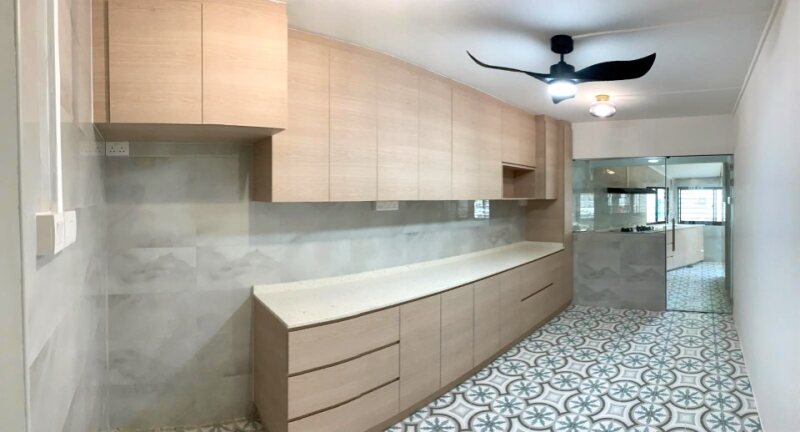
A typical Singapore renovation quotation breaks down into materials, labour, and overheads across 8-12 trade categories (carpentry, masonry, electrical, plumbing, painting, flooring, false ceiling, aircon, hacking, tiling, waterproofing, glazing). Direct contractors charge 15-25% markup on materials and quote labour separately; ID firms bundle everything at 30-50% margin. Compare line-by-line costs, not just bottom-line totals, and watch for vague "provision sum" items that balloon during execution.
Anatomy of a Renovation Quotation: What Every Line Item Means
Singapore renovation quotations follow a standard structure, though presentation varies. Direct contractors typically itemise by trade and break out materials versus labour. Interior design firms often present a lump-sum package with design fees absorbed into margins.
Core Trade Categories You'll See
Every quotation—whether for a 3-room HDB or landed terrace—covers these trades in some combination:
- Hacking and demolition: Removal of walls, floor tiles, kitchen cabinets, bathroom fittings. Priced per square metre or per item. Expect S$8-15/sqm for floor tiles, S$15-25/sqm for wall tiles, S$300-600 per wall depending on thickness.
- Masonry: Building new walls, door frames, plaster patching. Brick walls run S$80-120/sqm installed; lightweight partition walls S$40-70/sqm.
- Carpentry: Kitchen cabinets, wardrobes, TV consoles, shelving, door frames. Typically the largest line item. Materials range from laminate (S$600-900/linear metre) to solid surface (S$1,200-1,800/m).
- Electrical: Rewiring, adding power points, light fixtures, DB board upgrades. Relocation of single point S$80-150; new point installation S$120-180 inclusive of trunking.
- Plumbing: Pipe rerouting, basin/WC installation, waterproofing. Full bathroom replumbing S$800-1,500 depending on pipe length and accessibility.
- Tiling: Supply and installation of floor/wall tiles. Labour averages S$12-18/sqm for homogeneous tiles, S$18-28/sqm for large-format porcelain. Tile material is quoted separately.
- Painting: Wall prep, priming, two coats of emulsion. S$1.50-2.50/sqm for walls, slightly higher for ceilings and feature walls with specialty finishes.
- False ceiling: Plaster ceiling with cornices or metal grid systems. S$18-30/sqm for basic plaster board with LED downlights.
- Flooring: Vinyl, laminate, or engineered wood. Vinyl planks S$3-8/sqft installed, laminate S$4-10/sqft, engineered wood S$8-18/sqft.
- Glazing and mirrors: Shower screens, wardrobe mirror doors. Frameless shower screen S$550-900 depending on size and hardware.
- Aircon: System 3 or 4 installation, trunking, condensate pipe routing. Not always included; sometimes a separate subcontractor quote.
- Built-in appliances: Hob, hood, oven. May be bundled or listed as "provision sum" if homeowner selects brand separately.
Materials vs Labour Breakdown
Direct contractors separate these clearly. You'll see "Material: S$X" and "Labour: S$Y" for each item. This transparency lets you source your own tiles, sanitary ware, or light fittings if you want to shave costs. Interior design firms often lump them together, which hides the actual markup on materials—common practice is 40-60% over trade price.
The "Provisional Sum" Trap
Watch for lines labelled "PS" or "Provision Sum." These are placeholder amounts for items not yet finalised—appliances, sanitary ware, light fittings. If the quote says "Toilet bowl, basin, taps – PS S$1,500" but you later choose Grohe or Hansgrohe fittings, expect a variation order adding S$800-1,200. Always ask which brands and models are assumed in provision sums, and get a revised quote with your actual selections before signing.
How to Compare Quotations Apples-to-Apples
Never compare bottom-line totals alone. One quote at S$45,000 may include hacking, painting, and homogeneous tiles; another at S$42,000 may exclude hacking and assume you'll repaint yourself. Build a comparison matrix.
Create a Line-Item Comparison Table
List every trade down the left column. Across the top, list each contractor. Fill in the itemised cost for each trade. Where a quote lumps multiple trades (e.g., "Carpentry and painting – S$18,000"), note it and request a breakdown. If a contractor refuses to itemise, that's a red flag—they're likely padding somewhere.
| Trade / Item | Contractor A | Contractor B | Larry Contractors |
|---|---|---|---|
| Hacking (tiles, walls) | S$2,800 | Not included | S$2,600 |
| Masonry (new walls) | S$1,200 | S$1,400 | S$1,150 |
| Carpentry (kitchen, wardrobes) | S$15,000 | S$18,500 | S$14,200 |
| Electrical (rewiring, points) | S$3,500 | S$3,200 | S$3,400 |
| Plumbing (bathroom reroute) | S$1,800 | S$1,600 | S$1,700 |
| Tiling (supply + install) | S$4,500 (PS) | S$5,200 | S$4,800 |
| Painting | Included | Not included | S$2,100 |
| False ceiling + lights | S$3,200 | S$3,800 | S$3,000 |
| Flooring (vinyl) | S$2,000 | S$2,400 | S$1,900 |
| Total (itemised) | S$34,000 | ~S$36,100 | S$34,850 |
Notice Contractor B's total appears lower at first glance, but hacking and painting are excluded—add those back and it's actually the highest. This matrix reveals the real cost and shows where each contractor is competitive.
Check Material Specifications
Two quotes for "kitchen cabinets" can differ by S$8,000 because one uses 16mm melamine-faced chipboard and the other uses 18mm plywood carcass with Blum soft-close hinges. Ask every contractor to specify:
- Carcass material and thickness (plywood vs MFC vs particleboard)
- Door finish (laminate, acrylic, lacquer, veneer)
- Hardware brand (Blum, Hettich, generic)
- Countertop material (laminate, quartz, solid surface, granite)
- Tile grade (homogeneous vs porcelain, size, brand like Hafary, Goodrich, Hafary-Castano)
- Paint brand (Nippon, Dulux, Jotun—significant quality variance)
If specifications aren't listed, request them in writing. A reputable contractor welcomes this; a vague one will deflect.
Understand Markup Structures
Direct contractors mark up materials by 15-25% and charge labour at cost plus small margin. Example: tiles cost us S$40/sqm trade price; we quote you S$48-50/sqm material, then add S$15/sqm labour separately. Total S$63-65/sqm. An ID firm might quote S$75-85/sqm all-in, absorbing higher margin because they're managing design, procurement, and coordination—but you're paying 20-30% more.
Neither model is "wrong," but know what you're buying. If you value design handholding and want one throat to choke, an ID firm's bundled pricing may suit you. If you're hands-on, have clear ideas, and want transparency, direct contractors save you 20-35% on a typical S$50,000 renovation—that's S$10,000-17,500.
Red Flags and Warning Signs in Quotations
Some quotation practices signal trouble ahead. Watch for these.
Vague or Missing Scope Descriptions
If a line says "Carpentry works – S$22,000" with no further detail, you have no basis to compare and no recourse if the contractor later claims your wardrobe design exceeds the quote. Insist on specifics: "3-door wardrobe, 2.4m(H) × 2.4m(W) × 0.6m(D), plywood carcass, laminate doors, Blum hinges, internal shoe rack and shelving."
Too-Good-to-Be-True Low Quotes
A quote 30-40% below others isn't a bargain—it's either missing scope, using substandard materials, or a bait-and-switch. The contractor wins the job, then hits you with variation orders mid-project when you're committed. A 4-room HDB full renovation realistically costs S$35,000-55,000 depending on finishes. If someone quotes S$22,000, ask what's excluded.
No Payment Schedule or Lopsided Terms
Fair payment schedules mirror project milestones: 10-20% deposit, 30-40% after hacking and carpentry rough-in, 30-40% after installation complete, 10-20% after defects rectified. If a contractor demands 50% upfront, you carry all the risk. If they want 90% before completion, they have zero incentive to finish punch-list items.
Missing HDB/MCST Permit Costs
HDB renovation permits cost S$45 (plus S$1,000 deposit refunded if no complaints). MCST approval for condo works may require S$200-500 admin fee and a refundable deposit of S$2,000-5,000. If your quotation omits these, clarify who's paying. Reputable contractors include permit application as a line item or absorb it and state so explicitly.
No Warranty or Defects Liability Period
Standard practice is 12 months defects liability on workmanship, longer for specific items (e.g., 10 years on Blum hardware from the manufacturer). If the quotation doesn't mention warranty, ask. Get it in writing. If a contractor says "Don't worry, we'll come back if there's a problem," that's not a warranty—it's a promise that evaporates when they don't answer your calls 13 months later.
Hidden Costs and Variation Orders
Even a detailed quotation won't capture everything. Expect variation orders (VOs) adding 5-10% to the original quote. The key is distinguishing legitimate VOs from scope creep invented by the contractor.
Legitimate Additional Costs
- Unforeseen site conditions: Hacking reveals concealed plumbing that needs rerouting (add S$400-800). Floor tiles underneath old tiles are cracked, requiring screed repair (add S$600-1,200).
- Owner-requested changes: You decide mid-project to extend the kitchen island by 0.6m (add S$1,200-1,800 depending on countertop material). You swap homogeneous tiles for large-format porcelain (add S$8-12/sqm).
- Upgraded materials: Provisional sum assumed S$150 per light fitting; you choose Flos pendants at S$450 each (add S$1,200 for four fittings).
- Permit delays requiring schedule adjustment: HDB processing takes 3 weeks instead of 2; contractor has to demobilise and return later, incurring additional transport (add S$300-600).
Dodgy Variation Order Tactics
Some contractors lowball the initial quote, knowing they'll make it back on VOs. Red flags include:
- "Site inspection revealed additional hacking required" when the scope was clear from the start. Always insist the contractor visits the site and inspects before quoting. A quote based on floor plans alone leaves room for this excuse.
- Charging for standard prep work like "floor protection" or "rubbish chute charges" that should be included in overheads. Ask upfront if the quote is all-in or if site preliminaries cost extra.
- Inflated VO rates: Original quote has tiling labour at S$15/sqm; VO for extra 10sqm charges S$28/sqm. Lock in unit rates for common VOs at contract signing: "Additional tiling at S$X/sqm, additional power points at S$Y each," etc.
Protecting Yourself
Include a VO approval clause in your contract: any change exceeding S$300 requires written approval before execution. This prevents surprise bills for "extras" you never authorised. Request a VO quote before work proceeds, compare it to original unit rates, and negotiate if it's inflated.
Timeline and Payment Milestones in Quotations
The quotation should include or reference a project timeline, typically 6-10 weeks for a full HDB renovation, 8-12 weeks for a condo or landed property. Payment stages tie to these milestones.
Standard Renovation Timeline
| Phase | Duration | Activities | Payment Due |
|---|---|---|---|
| Mobilisation & Hacking | Week 1 | Site setup, hacking walls/tiles, debris removal | 10-20% deposit before start |
| Masonry & Rough-ins | Weeks 2-3 | Build walls, electrical/plumbing rough-in, waterproofing | 30-40% after hacking complete |
| Carpentry Installation | Weeks 4-6 | Cabinets, wardrobes, built-ins, false ceiling | 30-40% after carpentry installed |
| Finishing Trades | Weeks 7-8 | Tiling, flooring, painting, fixtures | 10-20% after substantial completion |
| Defects Rectification | Weeks 9-10 | Punch-list, touch-ups, final clean | 5-10% retention after defects rectified |
If a quotation proposes 50% upfront and 50% on completion, you're funding the contractor's cash flow with zero leverage if things go wrong. Push back for milestone-based payments. Holding 10-15% retention until defects are rectified ensures the contractor returns to fix issues—they want that final cheque.
Delays and Liquidated Damages
Some homeowners request a delay penalty clause—e.g., S$100/day if project exceeds agreed timeline. This is reasonable for commercial fit-outs or if you face genuine financial loss (e.g., rental income foregone). For residential, it's less common and contractors may price in the risk. More practical: agree on a realistic timeline with buffer (quote 8 weeks, plan for 9-10) and a communication protocol if delays arise.
Questions to Ask Before Accepting a Quotation
A quotation is a starting point for negotiation, not a take-it-or-leave-it offer. Ask these questions to clarify ambiguities and test the contractor's responsiveness.
- "Can you provide a detailed material spec sheet?" If they say "we use good quality materials," that's meaningless. Ask for brand names, product codes, thickness, finishes.
- "What's included in the overheads line item?" Overheads typically cover site supervision, rubbish removal, chute charges, floor/wall protection, transport. If it's vague or excessive (10-15% on top of all trades), clarify.
- "How do you handle variation orders?" Get their VO approval process and unit rate commitments in writing.
- "Who is the on-site supervisor, and how often will they be present?" Some contractors quote low because they're juggling six sites simultaneously. Confirm dedicated supervision.
- "What's your defects liability period and claim process?" Ask for examples of past defect rectifications—serious contractors have a documented process.
- "Are you licensed for this work?" HDB requires a registered contractor (HB-class licence). BCA requires a builder's licence for structural A&A on landed. Check HDB's registered contractor list or ask for licence numbers.
- "Do you carry workmen's compensation and public liability insurance?" If a worker is injured on site or damages your neighbour's unit, you're liable unless the contractor is insured. Ask for proof.
Frequently Asked Questions
How many quotations should I get before deciding?
Three to five is the sweet spot. Two isn't enough to spot outliers; more than five becomes overwhelming and you'll struggle to compare. Include a mix: one or two direct contractors and one or two interior design firms if you're weighing that trade-off. Use the line-item comparison table to evaluate fairly, not just lowest price.
Is the cheapest quotation always a bad choice?
Not always, but scrutinise it. If Contractor A is 10-15% cheaper because they own a carpentry factory (like Larry Contractors) and cut out middleman markup, that's legitimate cost advantage. If Contractor B is 35% cheaper with no clear reason, it's underspecified, uses inferior materials, or they'll recover margin through variation orders. Ask what's different—materials, scope, or process—before deciding.
Can I negotiate a renovation quotation down?
Yes, within reason. Contractors expect some negotiation. Ask where there's flexibility: "Can we use laminate countertop instead of quartz and save S$1,500?" or "If I supply my own tiles, will you reduce the material charge?" Blanket "give me 10% off" rarely works—margins are thin. Negotiate scope or specifications, not arbitrary discounts, and you'll get further.
What happens if the actual cost exceeds the quotation?
If it's due to unforeseen site conditions or owner-requested changes, the contractor issues a variation order. You approve it before work proceeds. If the contractor simply underquoted and tries to charge more for the original scope, you're not obliged to pay—the quotation is a contract. This is why detailed scope descriptions matter. If it says "kitchen cabinets as per drawing" and you have a signed drawing, any deviation is their problem, not yours.
Should I pay a deposit before work starts?
Yes, a deposit of 10-20% is standard and fair. It covers initial mobilisation and material procurement. Never pay more than 20% upfront unless there's a large custom order requiring advance payment (e.g., imported stone). If a contractor demands 50% deposit, they're either cash-strapped or planning to take your money and run. Walk away.
Get a Transparent, Itemised Quotation from Larry Contractors
At Larry Contractors, we've issued over 500 detailed quotations since 2009, and our pricing structure is straightforward: itemised trade-by-trade, materials and labour separated, clear specifications, and milestone-based payments. Because we own our carpentry factory at 19 Kaki Bukit Industrial Terrace, we quote carpentry at direct factory cost plus modest margin—typically 20-30% below what you'd pay an interior design firm. Our HDB licence (HB-09-5667H) and BCA GB2 grading mean we're qualified for HDB, condo, and landed projects. If you're comparing quotations and want one that's transparent and fair, reach out on WhatsApp at +65 9107 2601. We'll visit your site, understand your scope, and provide a line-item breakdown you can actually compare. No provisional sums for standard items, no hidden VO traps, no jargon—just honest pricing and solid work.
Related: How to choose an office renovation company in Singapore — what the three types of firm actually do, and the questions that separate them.
Related: F&B restaurant renovation in Singapore — budgets, NEA and SCDF approvals, kitchen and exhaust requirements, and the sequence that keeps an opening date.
Going deeper: once the quotation stacks up, the payment terms are the next thing to fix - see deposits, progressive payments and retention.
Also worth reading: what a 4-room resale renovation package actually includes — line by line, against our published prices, and direct contractor or interior design firm: where the money actually goes.
Related: a vague scope is where defects disputes start — what to do when defects appear and the contractor stops replying.
Related: a quotation to finish somebody else's job has to be read differently — see taking over an unfinished renovation, where rectification and completion must be quoted as separate figures.
If you are still deciding how the work should be packaged, design and build versus appointing a designer separately sets out which route suits which kind of project.
Related: Renovation debris and waste disposal — the rules and what goes wrong.
Also worth reading: renovating from overseas - managing a Singapore renovation you cannot visit.
If part of the quotation is for materials you intend to buy yourself, read what supply-only really costs.
Related: if the quotation is also going to a bank, it has a second reader who has never met you. What it must contain in that case is set out in the half of a renovation loan your contractor is responsible for.