
Taking Over an Unfinished Renovation: What Happens Next
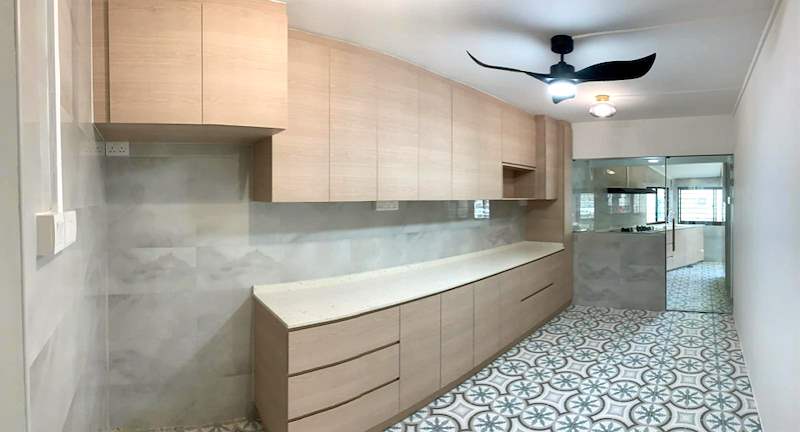
The carpentry is half up. The bathroom is stripped and screeded but not tiled. There is a pile of unopened boxes in the living room that may or may not be yours. And the contractor has stopped replying.
This happens more often than anyone admits, and the advice available online is almost useless, because it is all written for people who have not started yet. This is written for the position you are actually in.
The most important thing to understand at the outset: what you do in the first week decides how much this costs. Not the lawyer, not the argument. The first week.
Stop paying. Today.
If there is an instalment due, do not release it. If a payment has been requested "to buy materials", that is the request that most often precedes a disappearance.
Money you still hold is the only real leverage you have left, and it is also the budget for finishing the job. Every dollar released to a contractor who has gone quiet is a dollar you will spend twice. This is the whole argument for staging payments against completed work rather than against dates — how progressive payments should be structured — and the reason the position you are in now is usually decided months earlier.
Document the site before anybody touches it
Before a new contractor walks in, and certainly before anyone tidies up, record what is there. This takes an afternoon and it is the difference between a defensible claim and a story.
- Photograph every room, wide and close. Include the ceiling, the floor, and every wall — even the ones nothing has happened to.
- Photograph anything concealed that is still open: exposed wiring, pipe runs, waterproofing membrane, a floor trap, ducting above a ceiling that has not been boarded. Once it is closed up, nobody can tell you what is behind it, including the person you are about to hire.
- List the materials on site and photograph them, boxes and labels included. Some of it you have paid for; some may belong to a supplier who has not been paid and will come asking.
- Take meter readings if the utilities are in your name.
- Save every message. Export the WhatsApp chat. Do not rely on it staying in your phone.
Date everything. A folder of dated photographs is what turns "he didn't finish the waterproofing" into something a third party can assess.
The permit is the part most people miss
An HDB renovation permit is applied for by the renovation contractor, under that company's own registration with HDB. It is not yours, and it does not transfer to whoever you hire next.
That has two practical consequences. The incoming contractor has to apply for a permit in his own name before he can do permitted work, and the outgoing permit has to be dealt with rather than ignored. Call your HDB Branch and tell them what has happened; they will tell you the status of the existing permit and what has to happen before another one can be issued for the same flat.
Two things are worth knowing while you do that. Permits are time-limited, and the clock does not pause while you look for a replacement contractor — check the expiry date on your copy before you assume you have time. And a contractor who offers to carry on "without bothering with the permit" has told you everything you need to know about him; hacking or works done outside a valid permit is a problem that surfaces later, at the worst possible moment, and it lands on the flat owner rather than the contractor.
In a condominium the equivalent is the MCST. The renovation deposit and the approval will be in the outgoing contractor's name, the management will want a fresh submission from the new one, and the deposit may well be tied up until the original job is formally closed off. Start that conversation early — it is administrative, but it is on the critical path.
Get the file together before you call anyone
Any competent contractor asked to take over a stopped job will want to see the same things. Having them ready is the difference between a quotation this week and a quotation in three.
- The original quotation, and every variation order or change agreed afterwards.
- Every payment record — dates and amounts — and what each was supposed to cover.
- The permit copy, and the outgoing contractor's HDB registration number.
- Any drawings, layouts or carpentry shop drawings you were given.
- Your dated photographs.
- The message history, particularly anything where the contractor stated what was done or promised a date.
Expect the takeover quote to be higher, and understand why
This is the part that surprises people, and it is not opportunism. A contractor pricing the completion of somebody else's job is pricing something genuinely harder than pricing a fresh flat.
He cannot see what is behind the walls. He does not know whether the waterproofing was laid properly, whether the screed falls to the trap, whether the concealed wiring was run in conduit, whether the carpentry carcass is square. He was not there. If he warrants the finished flat — and he should — he is warranting work he did not do and cannot inspect.
So a serious takeover quotation does two things, and if yours does not, ask why:
- It separates making good from completing. Rectifying what was done badly is one number; finishing what was never started is another. Mixing them into one figure hides where your money is going and makes the whole quote impossible to compare.
- It states what is excluded because it cannot be inspected. An honest contractor will name the parts he is not warranting — typically concealed work — rather than quietly warranting nothing.
The same reading discipline applies here as anywhere else: how to read and compare renovation quotations is worth an hour before you sign the second contract of this renovation.
The three things worth opening up, even though it hurts
Nobody wants to break out work they have already paid for. Sometimes it is still the cheaper decision.
Waterproofing. If a bathroom or a yard has been screeded and there is no photographic record of the membrane being laid and ponded, you have a choice: break out a section and look, or accept in writing that nobody is warranting it. A leak into the unit below, discovered a year later, costs several times what the inspection would have. This is the single most common place a stopped renovation turns into an expensive one.
Electrical. Any circuit that has been altered has to be certified before it is energised, and half-run wiring left by an absent contractor is the highest-risk thing in the flat. Have a Licensed Electrical Worker check what was done. Do not let anyone connect it and "test it" first.
Anything structural or hacked. If walls came down, satisfy yourself that what came down is what was approved. That is a five-minute check against the permit and the approved plan, and an extremely expensive thing to discover later.
Recovering money: be realistic about the order
Chase the money, but do it in parallel with finishing the flat, not instead of it. A renovation that stops for six months while a dispute runs costs you rent or a mortgage on somewhere you cannot live.
Send a written demand with a deadline, through a channel that leaves a record, listing exactly what was paid and what was delivered. If that fails, the Small Claims Tribunals handle renovation disputes up to their stated limit and do not require a lawyer — check the current limit before assuming your claim fits.
And be clear-eyed about the case where the company is insolvent. If it is being wound up, you are an unsecured creditor and realistic recovery is often very little. That is not a reason to skip the demand letter; it is the reason the first instruction in this article was to stop paying.
The short version
Stop paying immediately. Photograph everything, especially anything still open, before a single person tidies the site. Call the HDB Branch about the permit and the MCST about the deposit, because neither transfers with the job. Assemble the quotation, receipts, permit and messages into one file. Expect a takeover quote to be higher, and insist it separates rectification from completion and says what it will not warrant. Open up the waterproofing and the electrical work rather than hoping. Chase the money in parallel, not first.
Need someone to look at a stopped job?
We are an HDB Licensed Renovation Contractor (HB-09-5667H) and we do take over unfinished work. We will walk the flat, tell you honestly what has to come out and what can be built on, and quote rectification and completion as separate figures so you can see where the money goes. Message us on WhatsApp, or read more about working with us on direct contractors and HDB renovation.
Before it gets to this point, it is worth checking whether you are dealing with a normal slip — renovation delays and what to do about them.