
Renovating a Flat You Have Just Inherited
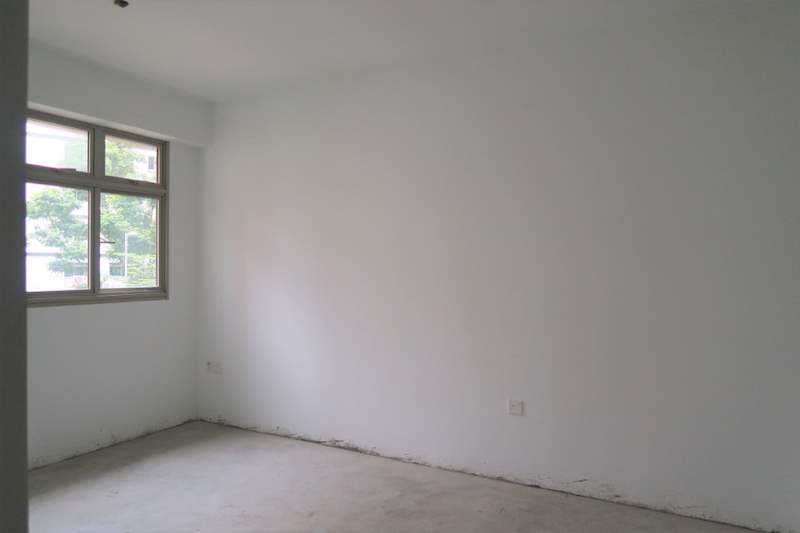
An inherited flat arrives differently from every other renovation. Nobody chose it, nobody viewed it, and there was no handover. It is usually somewhere between twenty-five and forty years old, it has been lived in continuously by someone who had no reason to keep receipts, and the person who could have answered every question about it is the reason you now own it.
The renovation itself is ordinary work. What is not ordinary is the order you have to do things in, and the two questions that decide the budget before anybody measures a single wall. This is what to establish first.
Nothing starts until the flat is legally yours
A renovation permit for an HDB flat is applied for through a registered renovation contractor, against the flat and its registered owner. Until the transfer of the flat out of the estate is complete and you are that registered owner, there is no permit to apply for and no legitimate way to start.
That sounds obvious written down, and it still catches people out, because estate matters run on their own timetable and renovation quotations come with dates. Owners get a quotation in the first month, agree a start date in the second, and then spend the third watching the date pass while paperwork moves. If a contractor is willing to book you a start date before you can show ownership, that tells you something about how he handles permits generally.
The practical sequence is: complete the transfer, then get the flat surveyed, then quote, then permit, then start. Anything that runs ahead of that order is a date you do not control.
You inherit the flat and you inherit its renovation history
This is the one that costs money, and almost nobody sees it coming.
Work done to a flat over three or four decades was not necessarily approved when it was done. A wall opened up in 1998, a service yard enclosed, a bathroom floor raised, a kitchen extended into the corridor space, a household shelter door taken off and stored in the store room. Some of it was fine. Some of it was never permitted, and the position on unauthorised renovation works is that they belong to whoever owns the flat now — not to whoever did them. We set that out in full in unapproved renovation works in a resale flat, and an inherited flat is the same problem with none of the buyer's leverage, because there is no seller to negotiate with.
Walk the flat before you plan anything and look specifically for:
- Walls that are not where the floor plan says they are. Get the flat's original layout and compare it room by room. A wall that has moved, gone, or gained a large opening is the first thing to establish, because some walls in an HDB flat cannot be touched at all — see which walls you can remove.
- The household shelter. Its door, frame, seals and vent are part of the flat's shelter provision, and older flats often have the door removed, the walls drilled for shelving, or the room turned into a wardrobe. What may and may not be done to it is covered in the household shelter rules.
- The service yard and any balcony. Enclosing one is a common older alteration and a common reinstatement item.
- Raised floors, particularly in bathrooms. A floor built up over an existing one usually means the original waterproofing is buried under it, and its age is now unknowable.
- Anything that looks like it was done by someone who lived there. Home-made partitions, a sink moved to a new position, an air-conditioner point that clearly came later.
None of this necessarily has to be undone. But you want it identified and priced before you commit to a budget, not discovered halfway through by an inspection.
The four things behind the finishes that decide the number
In a flat of this age, the visible finishes are the cheap part. What sets the real budget is what is underneath, and there are four items worth checking properly.
The bathrooms. Original waterproofing in a flat that has been in continuous use for decades is at the end of its life, and in an inherited flat you rarely know whether it was ever redone. This is the single item where cutting the budget costs the most later, for reasons we set out in bathroom waterproofing and what it costs.
The electrical installation. Look at the distribution board. An older board with fewer circuits than a modern household needs, and no record of rewiring, tells you a substantial part of the budget is going into work you will never see. Any of it must be done by a licensed electrical worker, not a handyman — see electrical work in a renovation.
The floors. The choice is overlay or hack, and it is decided by what is there and how level it is, not by preference. Hacking an old screed and floor finish out is dusty, slow and generates a great deal of debris — and debris disposal is its own line item, covered in renovation debris and waste disposal.
The windows. Check the condition of every casement window and its rivets. Window replacement is not renovation work and cannot be done by your renovation contractor — it belongs to an approved window contractor under a separate registration and a separate permit, which is a scheduling fact as much as a licensing one. It is set out in windows are the one job your renovation contractor cannot do.
Look for the paperwork before the skip arrives
Somewhere in an inherited flat there is usually a folder. Before anything is cleared, look for it, and look for these things in it:
- Any past HDB renovation permits, which tell you what was approved and when.
- Records of a previous rewiring or plumbing job, which answer questions you would otherwise pay someone to open a wall to answer.
- Warranty documents for windows, grilles or a water heater, which occasionally still have life in them.
- The household shelter door key and its documentation.
- Anything from a past upgrading programme, since work carried out under one of those changes what is behind certain walls and floors.
The clearing of an inherited flat happens fast and emotionally, and paperwork is the first thing to go into a bag. An hour spent on that folder is worth more than most things you will do this month.
Decide what the flat is for before you decide what it looks like
Three futures, three genuinely different renovations, and the decision belongs at the start rather than in the middle.
Moving in. Then it is a full renovation of an older flat, and the honest question is what is worth keeping and what is not — which is rarely what people expect, and is worked through in what to keep and what to hack in an older flat.
Renting it out. Then the money goes to durability and to the things a tenant will complain about, and not to the things that photograph well. That is a different specification, and it is set out in renovating a flat to rent out.
Selling it. Then in most cases the work that pays for itself is narrow: making unauthorised alterations right, dealing with anything that would show up badly on a viewing, and leaving the rest to the buyer's own taste.
Deciding this late is expensive, because it is the reason people specify a home and then let it to a tenant, or specify a rental and then move in.
The part nobody puts in a quotation
An inherited flat is usually still full. Someone has to be in the room while the contents are sorted, and that person is normally the same person deciding on tiles. It is worth deliberately separating the two: clear and sort the flat completely, then survey it empty, then plan. An empty flat is also the only condition in which a contractor can see the walls, the floor levels and the state of the screed and give you a number that will not move.
And take photographs of every room before anything is cleared. Not for sentiment, though that too — for the record of what the flat looked like when it came to you, which is the only evidence you will ever have of what was already there.
The short version
- No permit and no start until the transfer is complete and you are the registered owner.
- Unauthorised works from decades ago become your responsibility, so identify them before you set a budget.
- Compare the flat against its original layout, room by room, and check the shelter, the service yard and any raised floors.
- Waterproofing, the electrical board, the floor screed and the windows set the real number, not the finishes.
- Find the folder before the flat is cleared.
- Decide whether you are living in it, renting it or selling it before you specify anything.
- Survey the flat empty. It is the only way to get a price that holds.
If you have inherited a flat and want to know what can and cannot be done to it before you commit to anything, WhatsApp us on 9107 2601 — tell us the flat type, roughly how old it is and whether the transfer is done, and we will tell you what has to be established first. Larry Contractors is an HDB Registered Renovation Contractor, HB-09-5667H; how to check that for any firm is in checking an HDB registered renovation contractor, and you can read how we work on our direct contractor and HDB renovation pages.