
Moving the Toilet in an HDB Bathroom: What the Pipes and the Floor Allow, and What to Settle Before Hacking
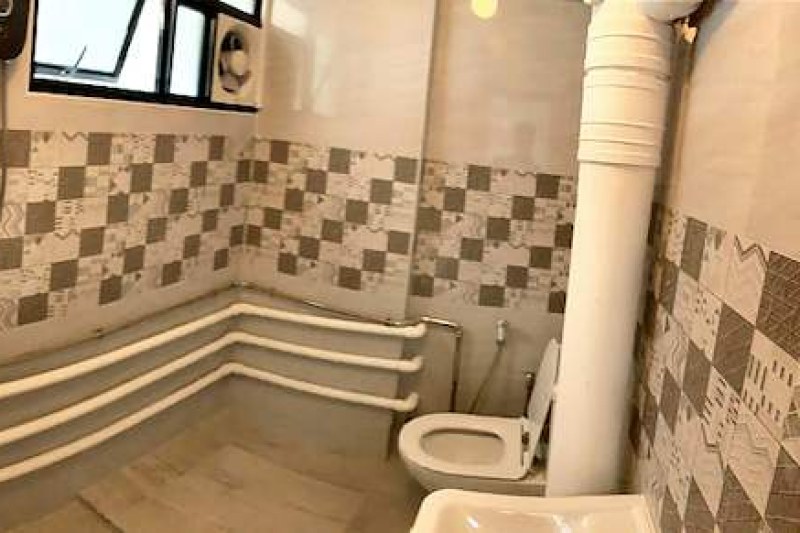
Pictured above: the bathroom of an older HDB flat after renovation, from our project archive (C04). It shows the white-painted pipework along the wall, the large white pipe beside the basin and the toilet bowl, which is where this question starts.
"Can we shift the toilet over there?" is one of the first questions at a bathroom site visit. Usually the reason is a good one: the door opens onto the bowl, the basin has nowhere to go, or the shower would be bigger if the toilet moved to the other end. The honest answer is never a straight yes or no on the day. It depends on the pipes under the floor, on the age of the flat, and on a permit. This guide sets out what we publish about it, so that you can ask the right questions before the hacking starts.
It gives no price for moving a toilet, because we do not publish one. It also does not promise that your toilet can move, because that is decided at the site visit, not in a blog post.
The short answer
- Do not assume the toilet can move. On our bathroom page, for HDB flats built before 2003 the wet-area floor is structurally thinner, and the toilet and shower positions generally have to follow the original wet-zone footprint. We advise at the site visit what is allowed and what is not.
- Moving it is a plumbing job, not a tiling job. Our bathroom page describes repositioning the toilet, shower or sink as re-routing the SP and SW pipes within the screed, with the drainage gradient adjusted and the work pressure-tested.
- It has a knock-on effect on the floor. A bowl connects to the soil pipe in a fixed position. Moving it even half a metre can mean building up the floor to keep the fall, which raises the finished level, which changes the door and the threshold detail.
- It needs the HDB renovation permit. All HDB bathroom hacking and plumbing alteration needs one, and only a licensed contractor can apply for it. Our permit guide lists repositioning toilets among the works that need a permit.
- Keeping every fixture where it is, is the biggest saving available. If your layout works, say so on day one.
Three different jobs that all get called "moving the toilet"
When an owner says "change the toilet", the quotation could mean any of three things, and they are not the same job.
- Replace the bowl and leave it where it is. No pipe moves. The old bowl comes out and a new one goes in at the same position. Ask for the model name before the tiles are ordered. On our published programme the bowl goes in on days 15 to 17, after the floor and walls are finished, so you want to know what you are getting long before then.
- Shift the bowl along the same wall. The bowl is now connected to the soil pipe in a different place, so the pipe run changes.
- Swap places with the shower or the basin. This is the biggest change. The floor trap, the supply lines and the bowl connection may all move, and the floor has to fall correctly to the trap in its new position.
On our published bathroom page, plumbing and pipe re-routing is a line on its own. If your quotation says only "replace toilet bowl", ask whether it means job one. If you are expecting job two or three, the line should say so, and it should be a different amount.
Why the floor is the hidden cost
Water has to run downhill to the trap. Our bathroom page states the figure we work to: hack down to the slab, re-screed to a 1:80 gradient and replace the floor trap, instead of skimming over the old surface. At 1:80 the floor drops 15 mm over a 1.2 m run. That is a small number, until the trap moves and the whole fall has to be reset around the new position.
This is why, in our guide to renovating a single bathroom, we list moving the toilet or the floor trap among the things that turn a simple bathroom into a complicated one. A change in the floor level is not a small thing: the door has to clear the new height and the threshold detail has to be redrawn. None of that is on the quotation unless somebody asked the question first.
Where it falls in the programme
Our published bathroom process runs like this: hacking on days 1 to 2, plumbing and electrical re-routing on days 3 to 5, waterproofing on day 6, the 24-hour ponding test on days 7 to 8, screed, tiling and grouting on days 9 to 14, and sanitaryware, vanity and accessories on days 15 to 17.
The position of the toilet has to be fixed before day 3. After day 6 the membrane is down, and the floor and the walls up to 1.5 m have been waterproofed and tested. A change of mind after that means breaking through the waterproofing you have just paid to test. It is possible, but it is rework, and it is the kind of change we cover in our guide to variation orders and changing your mind mid-job.
The same early decision also drives the rest of the room. The basin has to sit where the waste point allows, which is the point we make in the guide to the bathroom vanity and mirror, and a shower screen has to clear the bowl, as in the guide to the shower screen. Move the bowl and both have to be drawn again.
What to look at before the site visit
You do not need to know the pipe layout. You do need to arrive with a clear idea of why you want the change, so the visit can test it. Before we come:
- Take wide photos of the bathroom from the door and from the far end, with the toilet, the floor trap, the window and the exhaust fan in frame.
- Write down the year the flat was built, or at least the block. The pre-2003 position rule on our bathroom page depends on it.
- Say what the move is meant to fix. A door that hits the bowl may be solved by changing the door swing or fitting a sliding door, with no pipe moved at all. If the door is the problem, read replacing bedroom and toilet doors: door only, or the frame too first.
- Note which bathroom it is, common or master, so the visit starts in the right room.
Questions to put to your contractor
- Can the toilet move in this flat, and is that decision in writing? For a flat built before 2003 the answer depends on the original wet-area footprint. A contractor who says "no problem" without looking at the floor has not answered.
- Where will the new waste connection go, and what happens to the floor level? Ask them to say it in terms of the door and the threshold, not just the pipe.
- Is the quotation based on the pipes as they are, or on an assumption? Ask what happens to the price if the pipe run turns out to be different once the floor is open.
- Who applies for the permit, and under whose licence? Our published answer is that the licensed contractor applies. We cover how to check a contractor's registration in how to check a registered HDB renovation contractor.
- When must I decide? The answer should be before the plumbing days, and the date should be on paper.
- Is the ponding test done after the pipes are final? It should be. Our process is two coats of membrane on the floor and 1.5 m up the wet walls, then the 24-hour test, with photos at handover. More in the ponding test and what to ask before tiling.
What goes into the quotation
Our quotations itemise the waterproofing, the tile cost per square metre, the sanitaryware, the vanity, the accessories, the plumbing and the labour separately, so you can compare line by line. On our bathroom page, an HDB bathroom is guided at $5,000 to $12,000, and a full hack-and-retile with a new toilet, basin, mixer, shower, vanity and waterproofing typically falls between $7,000 and $10,000. We do not publish a separate price for moving a toilet, because it depends on what is under your floor. It is quoted after the site visit.
What you can do is read the plumbing line. If you are keeping every fixture where it is, it should say so, and it should be lower for it. If the toilet is moving, it should say that too, and name the trap and the floor as part of the job. More on reading a bathroom quote in comparing a bathroom quotation line by line.
A checklist to take to your contractor
- Reason for the move written down in one sentence, and checked against cheaper fixes such as the door swing.
- Year the flat was built known, and the pre-2003 position rule asked about.
- Answer in writing on whether the toilet can move.
- New bowl position, trap position and finished floor level agreed, with the door and threshold in the same conversation.
- Date by which the position must be fixed, which is before the plumbing days.
- Permit applicant named, with the licence number on the quotation.
- Plumbing line on the quotation says whether fixtures stay or move.
- Ponding test booked after the final pipe position, not before.
Thinking about moving the toilet in your bathroom? WhatsApp us on 9107 2601 with your flat type, your estate, the year it was built if you know it and whether it is the common or master bathroom, and we will arrange a site visit to look at what the floor allows. Any price depends on that visit. The full bathroom process is on our bathroom renovation contractors page, and you can see more of this flat in our project photos.
Related reading: bathtub to shower conversion: what is under the tub · bathroom mould, the exhaust fan and floor slope · water heater in an HDB bathroom