
Mould in an HDB Bathroom: Exhaust Fan, Floor Slope and What to Fix in a Renovation
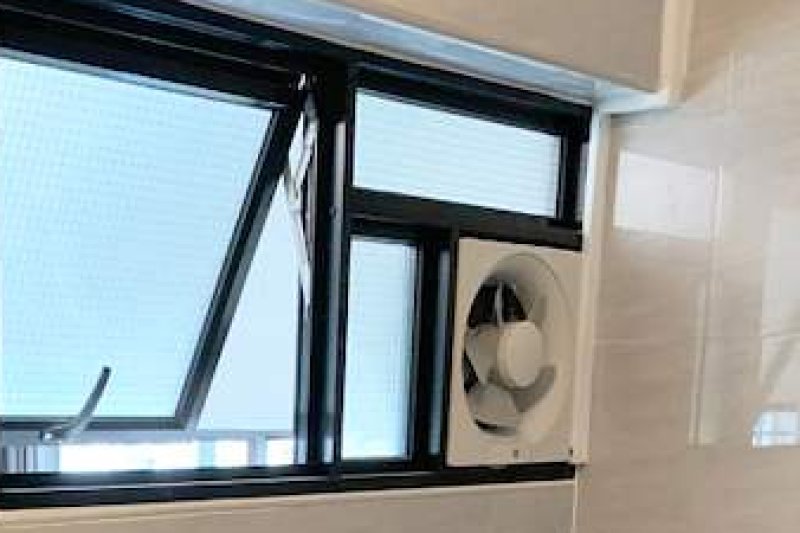
Pictured above: the window and exhaust fan in a finished HDB bathroom from our project archive (C04). Where that fan sends the air matters more than the fan itself.
The message we hear most often after a bathroom has been renovated is not about a leak. It is quieter than that. "The bathroom is only a few months old and there are black spots on the ceiling and the grout. Water sits on the floor after every shower. Is it the tiles, the fan, or did somebody skip a step?"
It is usually one of three separate problems, and they show up in different places. Before you pay for a clean-up or a re-do, work out which one you have. Each one is also something that belongs in the quotation before any work starts, which is the useful part if you are planning a renovation rather than fixing one.
First, read where the mould is
Mould is the symptom. Where it sits tells you where to look:
- On the ceiling, the upper walls and the silicone around the window or mirror: the air is not leaving. That is a ventilation problem.
- Along the grout lines at floor level, or in a corner where water pools: the water is not draining. That is a floor slope and drain problem.
- On a wall outside the bathroom, on a ceiling below, or behind a vanity, with the tiles inside looking perfect: moisture is getting behind the tiles. That is a waterproofing question, and wiping the surface will not touch it.
Two of the three can be present at once. Treat them one at a time.
Cause one: the steam has nowhere to go
A bathroom produces a lot of moist air in a short time, and in Singapore the air outside is already humid. If that moisture does not leave the room, it settles on the coldest, least cleaned surfaces: the ceiling, the grout and the silicone seams.
The mistake we see most often is a fan that exists but does not ventilate. Our bathroom renovation page says it plainly: without an exhaust fan ducted to the outside, not just discharging into the false ceiling cavity, mould appears on grout, ceilings and silicone within a year. A fan that blows humid air into the cavity above the ceiling has not removed the moisture. It has moved it somewhere you cannot see.
What to check, whether you are fixing a problem or planning a job:
- Where does the fan discharge? Ask the contractor to show you. The answer should be outside, not "into the ceiling".
- Is there a window? If so, can it be opened while you shower? A fan and a window are not alternatives to each other.
- What is the ceiling made of? We use moisture-resistant gypsum boards for a bathroom false ceiling, with concealed wiring and waterproof, IP-rated lighting where it is needed. A standard board and an ordinary downlight in a wet room are a quote line worth querying.
- Does the fan actually pull? Hold a single sheet of tissue near the grille while it runs. If it does not hold the tissue, the fan or its duct needs looking at.
In the schedule we publish for a bathroom, the fan rough-in happens in the first week, together with the plumbing and electrical re-routing, well before the ceiling closes. That is the right order, because the duct has to be in place before the board goes up.
Cause two: water that does not leave the floor
Water pooling after a shower, or a floor that dries slowly in one corner, almost always means the floor falls the wrong way or not enough. Old HDB bathrooms often have insufficient slope and a clogged or poorly set trap, and our bathroom page lists reusing the existing trap and floor gradient as a classic mistake: a new surface skimmed over the old one inherits every fault underneath it.
The approach we describe is to hack down to the slab, re-screed to a proper gradient of 1:80, and replace the floor trap. As arithmetic, 1:80 is a fall of 12.5 mm for every metre of floor. That is not much, which is exactly why it cannot be judged by eye. The tiler has to set it, and it has to be checked before the tiles go down.
A simple test you can do tonight: pour a jug of water in the corner furthest from the drain and watch. It should travel to the trap and go. If it stops and sits, the slope is wrong there. A little film is normal. A puddle that is still there an hour later is not.
Standing water also gives mould a permanent supply of moisture, which is why a bathroom can be well ventilated and still grow black grout. It is worth separating the two before spending money on the wrong one.
Cause three: moisture behind the tiles
This is the serious one, and it rarely shows as mould in the bathroom itself. Our standard is two coats of approved waterproofing membrane on the full floor and 1.5 m up the wet walls, followed by a 24-hour ponding test before any tiling begins. The tiling itself is floor-to-ceiling, because half-height tiling leaves exposed wall behind the basin and shower that, in our experience, discolours and cracks within 3 to 5 years.
If you can see damp or mould on a wall outside the bathroom, on a bedroom wall that backs onto it, or on the ceiling of the unit below, do not start with a cleaning product. That pattern suggests water is going somewhere it should not, and the person who needs to look at it is the contractor who did the waterproofing or, for an older job, someone who can open the floor and see. Our guides on the ponding test and what to ask before tiling and on hollow and popped floor tiles cover how this is tested and who normally pays when it fails.
What a bathroom quotation should say about all three
Whether it is a full renovation or a single room, these lines should be written down, not implied:
- Hacking down to the slab, not tiling over old tiles, with the floor re-screed to 1:80 and a new floor trap.
- Waterproofing in two coats, up the wet walls to 1.5 m, with a dated 24-hour ponding test.
- Floor-to-ceiling tiling in the wet zones.
- An exhaust fan, and where it vents to.
- The false ceiling board type and the lighting rating.
Our bathroom timeline is 2 to 4 weeks per bathroom, with the ponding test on days 7 and 8, the screed and tiling on days 9 to 14, and the false ceiling and final fittings at the end. If a schedule you are shown has the tiles going down the day after the waterproofing, one of those protections has been compressed. Renovating just one bathroom is a job where this shows up quickly, because there is nothing else on site to hide behind.
If it is only surface mould
Not every black spot means a renovation. Surface mould on silicone or grout in an otherwise sound bathroom may only need cleaning, replacing the silicone and running the fan for longer after showers. A contractor who looks at your photos should be willing to tell you when that is the honest answer. The point of the three causes above is to stop you cleaning the same spot every month while the real cause keeps feeding it.
A note on HDB rules
Bathroom hacking, plumbing alteration and electrical work in an HDB flat need an HDB renovation permit, and for flats built before 2003 the toilet and shower positions generally have to follow the original wet-area footprint. If you want the toilet or shower in a different place, raise it at the site visit rather than after the quotation, because we advise there what is allowed and what is not.
What to do this week
- Photograph where the mould is: ceiling, grout, silicone, outside walls. Wide shots as well as close-ups.
- Run the jug-of-water test and the tissue test above, and note what you see.
- Ask for the fan's discharge point and the waterproofing and ponding test lines in writing, from whoever quoted or built the bathroom.
Want a second opinion before you spend anything? WhatsApp us on 9107 2601 with the photos, your property type and estate, and tell us whether the bathroom is new or old. We will tell you plainly whether it points to ventilation, drainage or waterproofing, and arrange a site visit if it needs one, including when the honest answer is a clean-up rather than a re-do. Larry Contractors is an HDB Licensed Renovation Contractor, HB-09-5667H. Scope and published figures for bathrooms are on our bathroom renovation page.