
Common or Master Bathroom First in an HDB Flat, Singapore: Which to Renovate When the Budget Covers One
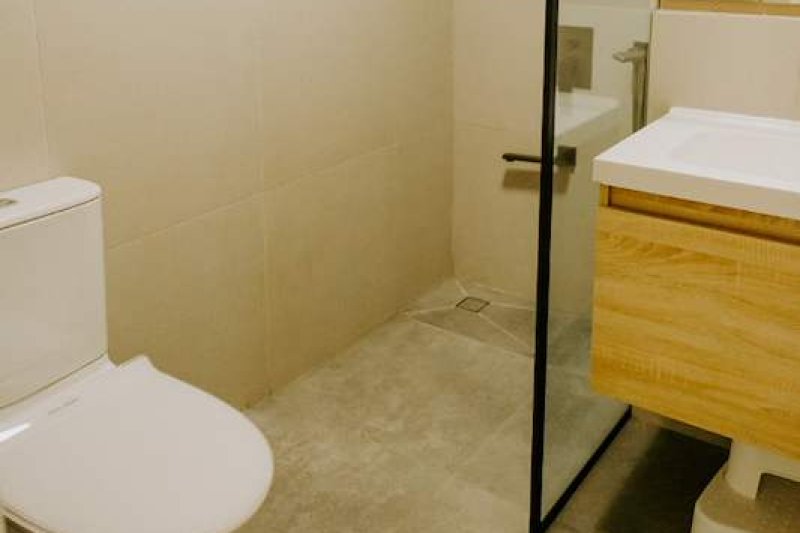
Pictured above: a bathroom in an HDB flat from our project archive, with large floor tiles, a black-framed glass shower screen, a floor trap in the corner and a wall-hung oak-look vanity. When a budget covers only one bathroom, the work in a picture like this is the same whichever bathroom it is. What differs is which one should be done first.
Many HDB flats have two bathrooms: a common bathroom off the corridor and a second one attached to the master bedroom. Most people who renovate one of them and then ask which should come first are not asking about taste. They have a budget that stretches to one properly done bathroom, and a worry that the other will have to wait a year or two. This guide gives the order we would work through, using only our published bathroom figures, and says plainly where there is no published number.
First question: is either one leaking or damp?
If one bathroom shows water damage, it goes first, whichever one it is. Look for a stain on the ceiling of the unit below, or a stain reported by the neighbour; for floor tiles that sound hollow or have lifted; for grout that stays dark, and for a floor that holds a puddle instead of draining to the trap. Waterproofing is the highest-value item in any bathroom job, because a leak takes the bathroom out of use, involves a neighbour and does not wait. A new vanity in the other bathroom is not a better use of the money than stopping this one.
Be careful about the opposite mistake as well. A bathroom with no visible leak is not proof that the membrane is sound; you cannot see it. If neither bathroom shows symptoms, the age of the flat tells you something, because the waterproofing in an older flat may be the original. Our guide to ceiling leaks and who is responsible covers the position if the stain is in your ceiling rather than a neighbour's.
If neither is leaking: choose by use, not by looks
With no leak in the picture, the order is a practical one:
- The one used most. A common bathroom shared by the whole household is used every day, and its floor, trap and silicone take the most wear. A master bathroom used by fewer people is used less.
- The one with the worse fittings. A toilet that rocks, a mixer that drips, a shower that no longer drains well. Fittings you are tired of are worth replacing, but they are not urgent in the way a leak is.
- The one with mould. Dark grout and ceiling spots usually point to ventilation or floor slope. Our guide to bathroom mould says which fault is behind which sign, so that the renovation fixes the cause and not just the colour.
- The one guests see. A common bathroom is the one visitors use, and some owners want that one to look right first. This is a legitimate reason, but it ranks below the three above.
What the published figures say about cost
Our bathroom renovation page gives one range for an HDB bathroom, common or master: $5,000 to $12,000. A full hack-and-retile with a new toilet, basin, mixer, shower, vanity and waterproofing typically falls between $7,000 and $10,000, and a master bathroom with a rain shower and double basins sits at the higher end of the range. So the master bathroom is more likely to be the dearer of the two, but only if you specify the extras. A plain master bathroom is not automatically more expensive than a common one.
There is no published price for the second bathroom as a discount. The range is per bathroom, so do not assume that two bathrooms cost twice the lower figure, and do not assume that doing both at once saves money. Ask for each bathroom as its own itemised block on the quotation. Our quotations itemise tile (per square metre), sanitaryware, vanity, plumbing and labour separately, which lets you compare each bathroom line by line and decide which block to approve. Our guide to comparing bathroom quotations line by line shows what each line should contain.
Whichever you choose, do not shorten the job
The temptation with a tight budget is to give the first bathroom the full treatment and the second a lighter one, or to give a bathroom a lighter version of its own job to fit the number. Our published method does not change with the size of the bathroom or the order:
- Two coats of waterproofing membrane over the full floor and 1.5 metres up the wet walls, then a 24-hour ponding test before any tiling begins. What to ask before the tiling goes through the test.
- Hacking down to the slab and re-screeding to a proper 1:80 gradient with a new floor trap, instead of skimming over an old surface with too little fall.
- Floor-to-ceiling tiles in the wet zones, because half-height tiling leaves the grout lines above exposed to splashes.
- An exhaust fan ducted to the outside, not just into the false ceiling cavity.
A bathroom done to this specification is the right job for the first one. A cheaper version of it is the wrong job for either.
One now and one later, or both together?
Doing both at once has one published advantage: bathrooms in one project usually run in parallel and do not extend the total duration much, against a single bathroom that takes two to four weeks. The cost of that is simple. Both bathrooms are out of use at the same time, and the budget has to cover both.
Doing one now and one later keeps a working bathroom in the flat throughout the first job. That matters most with a household of several people, or with elderly parents or young children, and it is the reason many families phase it. It also means a second round of the works, so put these questions to the contractor before you decide:
- Will the second round need a new permit application? Hacking and plumbing in an HDB bathroom need a renovation permit, so ask rather than assume.
- Will the neighbours go through the noisy days twice? The permitted hours are in our guide to renovation noise rules.
- Will the same tile be available in a year? Write down the product name, the size and the finish, and ask whether any spare tiles can be kept for the second bathroom.
- Which fittings should be bought now? Naming the toilet, basin and mixer before the plumbing days is covered in our guide to choosing the toilet bowl, basin and shower mixer.
If you will be living in the flat while the work is done, renovating while living in the flat has the practical side.
Check the block before you spend on either
If your block is on the list for HDB's upgrading programme, ask what the programme does to the toilets before you renovate them. The programme has optional improvements that include upgrading existing toilets and bathrooms, and the choice of a standard specification at a subsidised price against a private finish at full price. If an upgrade is coming, holding the wet areas and bringing forward everything else may be the better order. Our guide to HIP and your renovation sets this out.
Do not plan a layout change into the cheaper job
In an HDB flat built before 2003 the wet-area floor is structurally thinner, and the toilet and shower positions generally have to follow the original wet-zone footprint. The site visit is where it is confirmed what is allowed and what is not. That makes a like-for-like bathroom the lower-risk first job; if you want to move the toilet, read what the pipes and the floor allow first and treat that as the job that needs a firm quotation, not a line added to the cheaper one. Our guide to the single-bathroom job explains why one room costs more per square foot than people expect.
Questions to put on the quotation
- Is each bathroom a separate block, with its own total?
- Who does the waterproofing, and will you be shown the ponding test?
- Is the floor being re-screeded to a fall, and is the floor trap being replaced?
- Is the tiling floor-to-ceiling in the wet zones?
- Are the toilet, basin and mixer named by brand and model, or listed as "supply and install"?
- If the second bathroom is done later, is the price held, or will it be re-quoted? We publish no guarantee on this either way, so ask for the answer in writing.
What to do this week
- Look at both ceilings, floors and grout lines for the signs of a leak, and ask the neighbour below whether they have seen any stain.
- If there is no leak, rank the two bathrooms by use, fittings and mould, and write the result down.
- Decide whether you can live without one bathroom for two to four weeks, which settles whether to phase the work.
- Ask your block whether the upgrading programme has been done or announced.
- Ask for each bathroom as its own itemised block on any quotation you request.
We are an HDB Licensed Renovation Contractor, HB-09-5667H. Want one bathroom quoted properly, or both so you can compare? WhatsApp us on 9107 2601 with the block and estate, which bathroom is leaking or failing if one is, and photos of both rooms. Any price depends on a site visit. Our bathroom renovation page has the full scope and published ranges, and the HDB renovation contractors page covers the wider job.
Related reading: single-bathroom renovation · toilet waterproofing and the ponding test · bathroom quotations line by line · the days to be on site