
Ceiling Leak From the Flat Above in Singapore: Who Is Responsible, and What a Proper Repair Involves
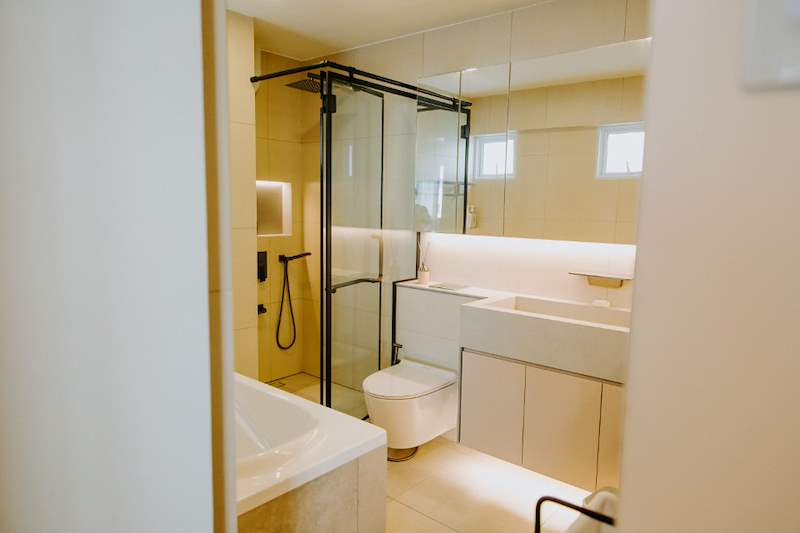
It starts as a faint brown ring on the bathroom ceiling. A few weeks later the paint has bubbled, the stain has crept down the wall, and on a bad day there is a drip onto the floor. Nobody in your own flat has done anything to the bathroom. The water is coming from somewhere above.
Two questions follow, and people usually ask them in the wrong order. The first one people reach for is "who pays?". The one that saves money is "where exactly is it coming from?", because the answer to the first depends almost entirely on the second.
First, work out where it is actually coming from
MyNiceHome, HDB's home-owner guide, describes the typical case plainly: ceiling leaks are particularly common in older HDB flats, especially in bathrooms and toilets, and happen when the waterproof membrane and screed in the floor slab deteriorate through natural wear and tear. The tell-tale sign it gives is water marks or stains extending from the ceiling down the wall.
But not every stain belongs to the flat above. Before you knock on anyone's door, rule these out:
- You live on the top floor. There is no flat above you. MyNiceHome says a top-floor leak is likely coming from the roof of the block, and the Town Council handles roof-related leakage repairs.
- You are on the second floor and water is leaking from your flat down to the void deck. MyNiceHome says those repair costs are split between the Town Council and you.
- The water is coming from common property. HDB's own guidance is to contact your Town Council for leaks from common property.
- Something inside your own ceiling. If you have a false ceiling or boxed-up pipes, look there first. It is an embarrassing conversation to have with a neighbour when the source turns out to be your own.
Then gather evidence, before any conversation starts:
- Photograph the stain with the date, wide and close, and trace its edge lightly in pencil. If the edge has moved in a week, you have proof it is active.
- Note when it gets worse. A stain that darkens after the household above showers in the morning points to their bathroom floor, not the roof or a pipe.
- Check what is directly above. Bathrooms are usually stacked one above another, so a stain directly under the upstairs bathroom is the common pattern.
HDB flats: the floor slab is a shared responsibility
This is the part that surprises people who assume the owner upstairs must pay. MyNiceHome states that both upper and lower floor flat owners share maintenance responsibilities for a ceiling leak, and that owners should discuss repair arrangements with their neighbours and split costs accordingly. The slab between two flats is, in effect, both owners' problem.
There are three important qualifications.
1. If the leak was caused by a renovation upstairs
Sharing is for leaks caused by age and wear. Answering a question in Parliament in February 2021, then Minister of State Faishal Ibrahim said that if a leak is due to renovations carried out in the upper unit, that owner is fully responsible for it and bears the full repair cost. If the stain appeared a few weeks after the flat above finished hacking its bathroom, say so, and keep the dates. (If you are the one renovating, our note on renovation damage to a neighbour's unit covers your side of it.)
2. HDB's Goodwill Repair Assistance
MND has described a Goodwill Repair Assistance scheme in written answers to Parliament. For ceiling leaks, HDB arranges the repair and co-pays 50% of the cost, and the remaining 50% is shared between the upper and lower floor owners. It is meant for leaks in the floor slab caused by wear and tear, not for owners' own fixtures and fittings. Schemes change, so ask HDB whether it is available for your flat and your case before either of you engages a contractor privately.
3. New flats: the warranty that disappears
This is the rule that catches renovating BTO owners out. HDB rectifies defects within the one-year defect liability period, and MyNiceHome lists an extended warranty for new flat owners on ceiling leakages and external seepage of 5 years. The condition is written into the same line: the warranty ceases if floor tiles are changed or the waterproofing system is tampered with.
Read that from both sides of the slab:
- If you own a new flat and plan to hack the bathroom floor for looks, you are giving up up to five years of HDB cover on exactly the kind of defect that is most disruptive to put right, in exchange for your contractor's warranty instead. Our own published warranty on standard renovation workmanship is 12 months from handover. That is not a reason never to redo a bathroom, but it should be a decision, not an accident.
- If you live below a new flat and a leak appears, ask whether the bathroom upstairs still has its original floor tiles. If it does, and the flat is inside the warranty period, contact HDB first.
If you are unsure whether a particular piece of work would count as tampering, ask HDB before any work touches the bathroom floor, not afterwards.
Condos: the law presumes the unit above
Private strata developments work differently. Under section 101(8) of the Building Maintenance and Strata Management Act, where there is evidence of dampness, moisture or water penetration on the ceiling of a unit, the defect is presumed to be in the unit or common property immediately above, unless the contrary is proven.
In practice that means the owner upstairs starts with the burden of showing the leak is not theirs, for example that it comes from a common pipe the MCST is responsible for. Tell the managing agent in writing early, because if common property is involved the MCST has to be part of the fix. Where owners cannot agree, these disputes can go to the Strata Titles Boards. In a newly completed unit, raise it with the developer under the defects terms of your purchase while those still apply.
In a landed house, the bathroom above your ceiling is usually your own. There is no neighbour to share with, and the only question is whose workmanship failed and whether a warranty still covers it.
How the leak should actually be fixed
MyNiceHome is direct about this too: re-screeding is the most effective solution for ceiling leaks. That means removing the floor tiles in the bathroom above to replace the waterproof membrane and screed. It also notes that, depending on severity and location, a contractor may recommend alternative repair methods.
A proper re-screed runs in this order:
- Hack out the tiles and the old screed in the bathroom above, down to the slab.
- Lay a new waterproofing membrane, carried up the walls rather than stopping at the floor edge, and properly detailed around the floor trap and pipe penetrations, which is where water usually finds its way through.
- Test it before it is covered. On our own jobs, wet areas get a 24-hour ponding test before tiling. Once the tiles are down, the next inspection is somebody's ceiling.
- Re-screed to fall and re-tile, so water runs to the trap instead of sitting on the floor.
- Only then repair the ceiling below, after the slab has had time to dry out. Painting over a wet stain first is money spent twice.
The household upstairs loses the use of that bathroom while this happens, which is often the real reason a neighbour resists. Get the number of days in writing before work starts so both households can plan around it.
If a cheaper alternative method is proposed instead of re-screeding, ask three things before agreeing: exactly what is being done, what happens if the stain comes back, and who pays for the second attempt.
What it costs
A leak repair is priced after someone has looked at it. The size of the bathroom, whether matching tiles are needed, and whether pipes around the floor trap need attention all change the scope, so any figure given over the phone is a guess.
Often the owner upstairs decides that if the floor is coming up anyway, the whole bathroom may as well be redone. For that, our bathroom renovation page publishes $5,000 to $12,000 for an HDB bathroom, covering a full hack-and-retile with new toilet, basin, mixer, shower, vanity and waterproofing. The extra fittings are the upstairs owner's choice and cost, not a shared repair cost, so agree that split in writing.
Getting it done without a feud
- Lead with the photos, not the bill. Most people upstairs genuinely do not know. Show them the stain and when it appears.
- Agree the cause, the method and the split in writing before anyone hacks anything: who engages the contractor, what the work covers, and what each owner pays.
- Agree access dates. The work happens in their flat; the ceiling repair happens in yours.
- If it stalls, go back to HDB (or the managing agent in a condo) with your dated record. Leaks do not stay the same size while two households wait each other out.
Questions to settle before any work starts
- Have I ruled out the roof, common property and my own ceiling?
- Is the flat above new enough to still have HDB's ceiling-leak warranty, with its original floor tiles?
- Was there a renovation upstairs before the stain appeared?
- Have both owners asked HDB whether goodwill assistance applies?
- Is the proposed fix a re-screed with a ponding test before tiling, and if not, what happens if it fails?
- Is the cost split, the access dates and any extra work upstairs agreed in writing?
Related reading
If the leak followed somebody's renovation, start with renovation damage to a neighbour's unit: who pays. For how the plumbing and the waterproofing fit together in a bathroom that is being redone, see the plumbing side of a Singapore renovation, and for the waterproofing itself, bathroom waterproofing in Singapore.
If you have a stain on your ceiling and want to know what is causing it and what the repair should cover, WhatsApp us on 9107 2601 with a photo of the ceiling and, if you can, of the bathroom above. We will tell you honestly what it looks like and what a proper fix involves. Larry Contractors is an HDB Licensed Renovation Contractor, HB-09-5667H; you can read how we work on our bathroom renovation and direct contractor pages.