
Reinstatement Works in Singapore: What Office and Shop Tenants Must Restore at the End of a Lease
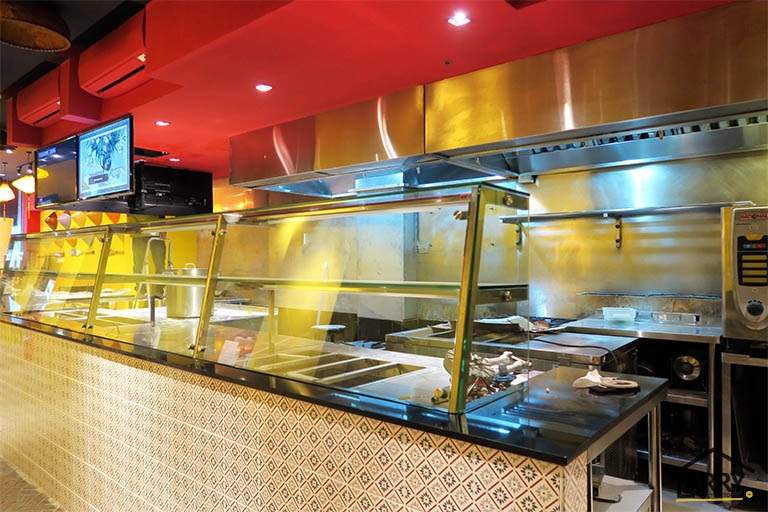
Every commercial tenancy in Singapore ends the same way, and almost nobody plans for it. Somewhere in the lease is a clause saying that at the end of the term you must return the unit to its original condition — strip out the partitions, take down the ceiling, remove the shopfront, make good the floor. That is reinstatement, and it is the last bill of the tenancy. It arrives at the worst possible moment, when the business has already moved or closed, and it is the one renovation cost that produces nothing you get to use.
The good news is that it is almost entirely predictable. What it costs is decided at the start of the lease, not at the end. Here is how it works and what to do about it now, whichever end of the tenancy you are at.
Reinstatement is a contract obligation, not a rule
There is no general law telling a tenant what to strip out. The obligation comes from your lease, so the clause is the whole answer and it varies enormously between landlords. Find it before you do anything else — it is usually called reinstatement, yielding up, or making good.
Three phrases decide most of the argument:
- "Original condition" or "bare shell". The most demanding version. You are returning the unit to the state it was in before any tenant fitted it out — often a bare slab, no ceiling, no partitions, capped services.
- "The condition in which it was handed over." Much gentler, and very different, because what you were handed may already have included a ceiling, flooring and lighting from a previous tenant. This is the version worth negotiating for.
- "Fair wear and tear excepted." This protects you against paying for ordinary ageing — scuffed paint, worn carpet in a corridor — but not against removing things you added.
If your clause says "original condition" and you were handed a fully fitted unit, that gap is real money. It is far easier to negotiate at signing than at expiry.
The single thing that decides the final bill
Photographs and a written condition record taken on the day you took possession — before a single screw went in.
Without them, the argument at the end is your memory against the landlord's, and the landlord holds the deposit. With them, the scope is not really arguable: this is what we received, this is what we added, this is what comes out.
If you are signing a lease this month, do this before you do anything else: walk the empty unit with a camera, photograph every wall, the ceiling void, the floor, the electrical panel, the existing lighting and sprinkler layout, and any equipment left behind. Email the set to the landlord or agent the same day and keep the sent message. It takes an hour and it is the cheapest hour of the whole tenancy.
What usually has to come out
Scope varies by unit type, but the same items appear on almost every reinstatement:
- Partitions and glazed screens — including the tracks, and making good the floor and ceiling where they were fixed.
- Ceilings — false ceilings, bulkheads and cornices added during the fit-out, back to the original grid or to open soffit.
- Flooring — vinyl, timber, carpet and their adhesive, back to a level, sound screed. Adhesive removal is routinely underestimated.
- Lighting and electrical alterations — added circuits, floor boxes, data trunking, and returning the distribution board to its original arrangement.
- Air-conditioning changes — relocated diffusers, added fan coil units, ducting run for a fitted-out layout.
- Sprinklers and fire protection — heads that were moved or added to suit your ceiling usually have to go back to the base-build layout, and that is licensed work, not a handyman job.
- Shopfront, signage and branding — including the fixings and any modification made to the shopfront line.
- Wet areas you introduced — pantries, sinks, additional toilets, plus the waterproofing and the drainage connection.
- Everything you own — furniture, equipment, stock, and the disposal of all of it.
F&B units carry more
A food unit is the most expensive reinstatement of the lot, because a kitchen touches services that a shop never does. Expect the exhaust hood and ductwork, the grease trap, gas piping, the extra water and drainage points, the kitchen floor waterproofing and screed, and cold room panels to all be in scope. Removing an exhaust duct that runs up a riser or across a common area involves the building's management and sometimes the neighbours, and that is a scheduling problem as much as a cost.
If you are on the other side of that transaction and taking over a fitted unit, the same list is your inspection checklist — see our F&B renovation guide for how the approvals sequence works.
What the landlord may let you leave
Landlords do not always want everything removed. A good ceiling, serviceable lighting, a clean glazed partition line or a usable pantry can make the unit easier to re-let, and a landlord who wants them will often waive that part of the scope.
Ask early, and get the waiver in writing, item by item. A verbal "don't worry about the ceiling" from a property manager who has changed jobs by the time you move out is worth nothing. A short email listing exactly which items are to remain, acknowledged by the landlord, is worth thousands.
The approvals and access nobody budgets for
Reinstatement in a managed building is as much an administrative job as a construction one. Depending on the building you may need the management's approval of the reinstatement drawings, a permit to work, insurance in the building's required form, a security deposit with the management office, hoarding and lift protection, and a debris removal schedule.
Then there is the working window. Many office and retail buildings only allow noisy or dusty work outside trading hours, which turns a five-day job into three weeks of nights. That constraint moves the price more than the material quantities do, and it is the first thing to establish when you ask anyone for a quote.
Start earlier than feels necessary
The most expensive reinstatement is a late one. If the lease requires the unit returned in reinstated condition on the expiry date and you are still working on it, you can find yourself paying holding-over rent — often at a penalty rate — for the privilege of stripping out a unit you no longer occupy.
A sensible sequence looks like this:
- Six months out — re-read the clause, dig out the handover photos, and write to the landlord asking which items they would like left in place.
- Four months out — agree the scope in writing, then get quotes against that agreed scope, not against a guess.
- Two to three months out — submit drawings and permits to building management, and book the working window.
- Final weeks — carry out the works, then hand over with photographs and a joint inspection so the deposit conversation is short.
How to get quotes you can actually compare
Reinstatement quotes are notoriously hard to compare because the scope is invisible until someone writes it down. Insist that every quote is priced against the same written scope, and that it states separately: the removal works, making good, disposal and haulage, the working hours assumed, the permit and deposit costs, and who is responsible for the licensed trades — the sprinkler and electrical work in particular.
If one quote is far cheaper than the others, the usual reason is that it has quietly assumed daytime working, or excluded the licensed trades, or left out disposal. The method for reading them side by side is the same one we set out in how to read and compare renovation quotations.
Plan the reinstatement while you plan the fit-out
The most useful thing in this article, for anyone at the start of a lease rather than the end: the fit-out decisions you make now set the reinstatement price you pay later.
Demountable partitions cost a little more to install and far less to remove. Keeping the base-build ceiling grid and working with it, rather than boxing over it, removes a whole trade from the exit scope. Fewer sprinkler relocations mean no licensed works at the end. Surface trunking is uglier than chasing into a wall, and it disappears in an afternoon. None of that means building a worse space — it means knowing which of two similar options has a tail attached to it.
Our published office fit-out ranges — $15,000 to $300,000 and up, depending on size and specification — sit on the office renovation page, and reinstatement is quoted separately after a site visit, because it depends entirely on what is actually in the unit. There is no honest way to price it from a floor area alone.
Talk to us about a reinstatement
Send us the reinstatement clause, the handover photos if you have them, and the lease expiry date. We will tell you what is genuinely in scope, what is worth asking the landlord to waive, and what the working-hours restriction in your building will do to the programme — before you commit to anything.
We are an HDB-registered renovation contractor, licence HB-09-5667H, working across offices, retail and F&B since 2009, with our own carpentry factory at 19 Kaki Bukit Industrial Terrace. We do the fit-outs and we do the strip-outs, which is why we are fairly blunt about which fit-out choices you will pay for twice.
WhatsApp 9107 2601 about a reinstatement →
Related reading: how to choose an office renovation company · making the most of a small retail unit · questions to ask before signing
Also worth reading: partition walls in Singapore — drywall, glass and half-walls, and which one suits the space you are dividing.
Reinstatement is one of several things that make a commercial job different from a home one. See what changes on a commercial renovation for the rest, including why it should shape what you build in the first place.
Related: Renovation debris and waste disposal — the rules and what goes wrong.
Taking over a unit that is already fitted out? The reinstatement clause matters even more there, because you can end up stripping out a fit-out you never built. See what to check before taking over a shop or F&B unit with the previous tenant's fit-out.