Taking Over a Shop or F&B Unit With the Previous Tenant's Fit-Out: What to Check Before You Pay
A unit comes up with everything already in it. The previous tenant built a kitchen, a counter, a ceiling, a shopfront. The agent says you can have the lot for a takeover sum, open in a few weeks instead of a few months, and skip most of the fit-out bill. Sometimes that really is the best deal on the table. Just as often, you have paid money to take on another business's problems. You paid to be the person who has to remove them at the end.
The difference between those two outcomes is almost never the condition of the tiles. It is in the lease and in the paperwork, and the checks take a few days. Here is what to look at before any money changes hands, in the order that saves you most.
First question: who pays to take it all out at the end?
Nearly every commercial lease in Singapore carries a reinstatement clause, and it is the single thing that decides whether a takeover is a bargain. We have covered the clause in detail in what office and shop tenants must restore at the end of a lease. The point that matters for a takeover is simple and people miss it all the time.
If your new lease says you must return the unit in "original condition" or "bare shell", then at the end of your tenancy you strip out the previous tenant's fit-out. It does not matter that you did not build it. You agreed to hand back a bare unit and you were given a fitted one, so the gap is yours to pay for. You paid the outgoing tenant once to take over the kitchen. Years later you pay again to rip it out.
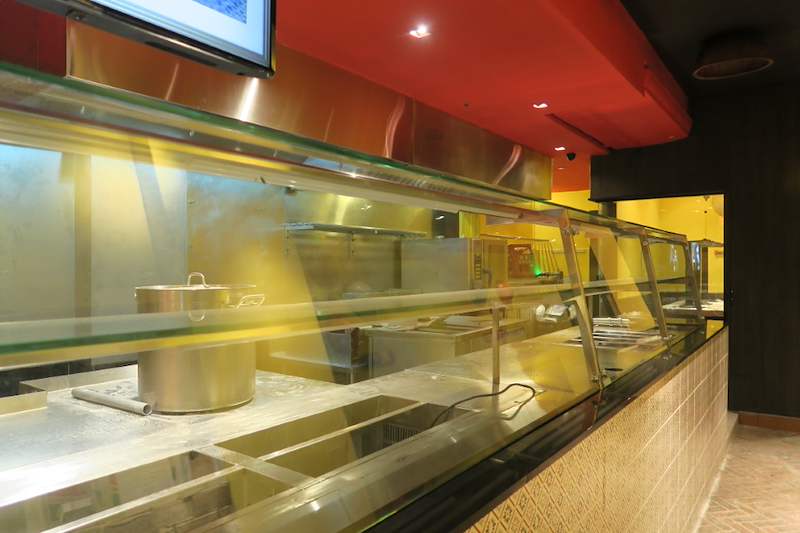
On an F&B unit that gap is large. Our F&B renovation page sets out what a food reinstatement involves: kitchen equipment removal, pumping out and decommissioning the grease trap, stripping out the ducting, replacing oil-soaked finishes, and a full degrease. A retail or office unit is lighter, but the same logic holds for every partition, ceiling and floor finish you inherit.
What to do about it, before you sign:
- Read the reinstatement clause in the draft lease, not the one the outgoing tenant signed. Your obligation comes from your own lease.
- Ask the landlord to accept the existing fit-out as the handover condition. Then your obligation at the end is to return the unit as you received it, not as a bare shell.
- If they will only accept some of it, get the list in writing, item by item. "Ceiling and lighting to remain, kitchen and shopfront to be removed at the end of the term" is worth far more than a friendly remark from a property manager.
- Photograph everything on the day you take possession and email the set to the landlord the same day. Of all the checks, this one costs least.
If the landlord refuses and insists on bare shell at the end, work the future strip-out into what you are prepared to pay today. Sometimes that turns an attractive takeover sum into a bad one.
Second question: was any of it approved?
A fitted unit looks finished. That does not mean it was ever allowed. When you take over the space, you take over whatever was built without permission along with it. A building management office that finds an unapproved partition, a moved sprinkler or an extra water point will often expect whoever is in the unit now to deal with it.
Ask the outgoing tenant, and the landlord or building management, for:
- The fit-out approval that building management gave for the original works, and the drawings they approved.
- As-built drawings if there are any, showing where the partitions, electrical circuits, water and drainage points actually run.
- For any layout that changed partitions or ceilings: evidence that the fire-protection side was handled. That means sprinkler coverage, detectors and exit routes. As we explain in what changes on a commercial renovation, where a layout change affects those, the submission is made by a Qualified Person for that premises. It is not something any contractor signs off on his own account.
- Any correspondence where building management asked for something to be rectified and it never was.
If nobody can produce any of it, that is not automatically fatal. It does mean you should treat the fit-out as unverified. Price it as if some of it may have to be redone to satisfy your own fit-out submission, because you will normally have to make one to building management for any works you do.
Third question: does the kitchen suit your business?
This is the F&B-specific trap. The last operator traded from this kitchen, so it must be fine. But their menu, their equipment list and their licensing set-up were theirs. The food shop licence requirements decide kitchen layout, sinks, drainage, ventilation and finishes. So a kitchen that worked for a drinks-and-pastry café can be wrong for a wok-heavy menu, and the reverse.
Before you pay for a kitchen, confirm:
- Exhaust. Is the hood and duct sized for how you cook, and is the ductwork clean? A greasy duct inherited from someone else is a cleaning job at best and a fire risk at worst. Anything involving cooking depends on what extract the building can give you, and that is finite.
- Grease trap. When was it last pumped out, and does it work? You will be the one living with it.
- Gas. Where the piping runs, and whether it suits where your equipment will sit. Gas work is done by licensed gas workers, not by a general renovation team.
- Floor and waterproofing. Look for tiles that sound hollow, water marks in the ceiling of the unit below if you can get access, and any sign of leaks at the floor-wall joint. Kitchen floors take water every night, and failed waterproofing is expensive to fix under a working kitchen.
- Electrical supply. Whether the existing supply covers your equipment list, not the last operator's. Increasing supply is a lead-time item with the building, not a same-week fix.
Our F&B renovation guide walks through the approvals sequence for a food unit. On a takeover, you are running that sequence against someone else's kitchen rather than a blank space.
Fourth question: what exactly are you buying?
A takeover sum usually covers "fixtures, fittings and equipment". That phrase hides three different kinds of thing, and they need different checks.
- Built-in works: ceiling, partitions, flooring, counters, shopfront, built-in carpentry. These stay with the unit. Their value to you depends entirely on the reinstatement question above.
- Loose equipment: fridges, ovens, display chillers, furniture. Ask for the age and make of each item, and test it running. Ask whether any of it is on hire or lease from a supplier. Equipment that belongs to a leasing company is not the outgoing tenant's to sell you.
- Things that belong to the landlord already. Some units were handed to the previous tenant with a ceiling, lighting or air-conditioning in place. The outgoing tenant cannot sell you what the landlord owns. Check the original handover condition with the landlord, not the tenant.
Get a written inventory attached to whatever agreement you sign with the outgoing tenant. "Everything as seen" is how disputes start.
Walk the unit with a contractor before you agree a price
The agent will walk you through the unit to show it off. You need a second walk-through, with a contractor, to find out what it will cost you. On that visit we would be looking at:
- The distribution board: how it is labelled, what has been added, and whether anything looks improvised.
- The ceiling void: lift a ceiling panel and look at what is up there. You will see cabling, ducting, signs of water and pests.
- Sprinkler heads against the current partitions: any area that looks as if it was divided off after the sprinklers went in.
- Carpentry near sinks and floors, where laminate swells and boards rot out of sight.
- The shopfront line and signage fixings, which are often fixed into the building in ways the landlord will want reversed.
- What you actually intend to change. Most takeovers are not "open as is". A new counter position, a moved partition or a different kitchen line means demolishing part of what you just paid for. Demolition, disposal and making good are real costs, and they belong in the comparison.
That last point is where takeovers most often go wrong. People compare the takeover sum against the cost of a full fit-out on a bare unit. The honest comparison is the takeover sum plus the cost of changing what does not suit you, plus the future strip-out you have just inherited, against a fit-out on a clean unit. For context, the office fit-out ranges on our commercial renovation page run from $15,000 for a small office refresh to $300,000 and above for a premium full-floor fit-out. A takeover that saves you part of that and adds a strip-out of someone else's work may not save anything at all.
The order to do it in
- Get the draft lease and read the reinstatement clause before you negotiate the takeover sum.
- Ask the landlord in writing whether the existing fit-out will be accepted as the handover condition, and which items, if any, must be removed at the end.
- Collect the paperwork: the building's fit-out approval for the existing works, drawings, and the building's fit-out guide for your own changes.
- Walk the unit with a contractor and get your changes priced, including demolition and disposal.
- Test and inventory the equipment, and confirm who owns each item.
- Only then agree the takeover sum, with the inventory attached.
- On the day you take possession, photograph everything and send the set to the landlord.
How we help with a takeover
We do both ends of commercial work: the fit-out and the reinstatement. That is exactly why we look at a takeover unit differently from an agent. We will walk the unit with you, tell you which parts are worth keeping, which will need rework for what you plan to do, and what the strip-out tail looks like if the lease is bare shell. We quote reinstatement separately after a site visit, because it depends entirely on what is actually in the unit.
Larry Contractors Pte Ltd has renovated Singapore spaces since 2009, is an HDB Licensed Renovation Contractor (HB-09-5667H) and works across residential and commercial premises, with our own carpentry factory for counters and built-ins. See our commercial renovation and F&B renovation pages for how we work.
Send us the unit address, the draft lease's reinstatement clause and a few photos, and tell us what you plan to change. WhatsApp us on 9107 2601.