
Renovating a Home You Rent: What a Tenant Can Change, and What Has to Go Back
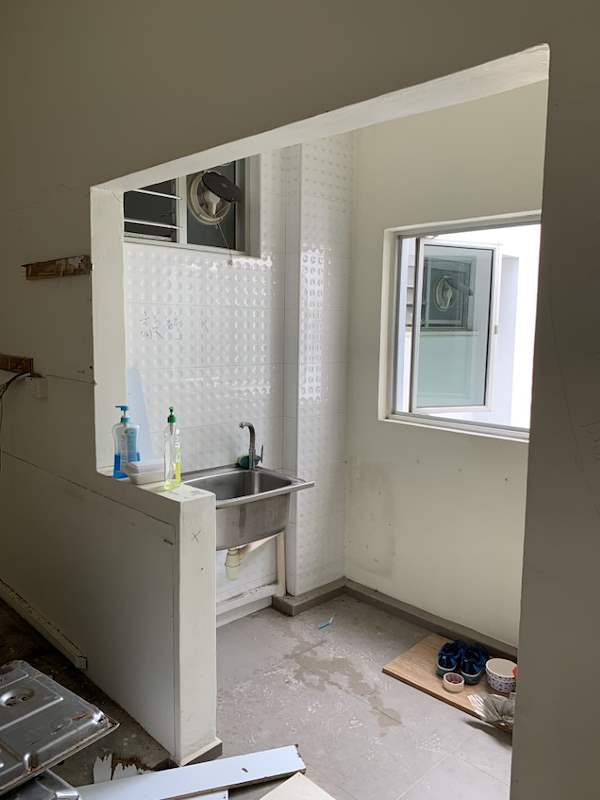
We get this call regularly, usually from someone who has been in a rented flat for a few months and has run out of patience with something: a kitchen with no storage, a bedroom with a light in the wrong place, a bathroom that works but is grim.
The question is always some version of how much of this am I allowed to change? And the honest answer is that the rules are the easy part. The rules are public and they are not complicated. What actually causes trouble — in nearly every tenant renovation that ends badly — is two omissions that have nothing to do with regulations: nobody wrote down exactly what was approved, and nobody photographed the unit on the day the keys were handed over.
Here is the shape of it, for tenants and for owners being asked.
The thing to understand first: you are not the applicant
This is the point most tenants have not been told, and it changes everything downstream.
For an HDB flat, a renovation permit is applied for by the flat owner. HDB's relationship is with the owner, and it is the owner who is answerable for what happens in the flat. A tenant cannot apply, cannot be the responsible party, and cannot authorise work in their own right. What that means in practice is that the owner has to agree to your scope in enough detail to put their own name to it — which is a higher bar than a friendly "sure, go ahead" over WhatsApp. What the permit process covers is set out in our guide to HDB renovation permits.
For a condo, the same logic applies through a different body. The MCST deals with the subsidiary proprietor — the owner — not with an occupant. Approvals, deposits and the conditions attached to working hours and lift protection all run through them. That process is covered in condo renovation rules and the MCST approval process.
So the first step in a tenant renovation is never a contractor. It is a conversation with the owner, and it is worth having before you have fallen in love with a plan.
The honest split: what is realistic, what is grey, what is not happening
Leaving aside what any particular tenancy says, here is roughly where the line falls in practice.
Realistic, with written consent
- Repainting, provided you and the owner have agreed in advance whether it goes back to the original colour at the end and who pays for that.
- Curtains, blinds and tracks — small fixings, easy to make good.
- Freestanding storage and furniture. The most underrated option, because it solves the actual problem in most rented flats and it leaves with you.
- Light fittings that swap. Keep the originals in a box. Genuinely — put them in a box, labelled, in the store room. This is the single easiest deposit to protect.
- Filters, sprays and accessories that connect to existing points without altering the plumbing.
- Devices that clip on and off — smart locks over the existing lock, plug-in controls, that class of thing.
Grey, and worth settling explicitly
- Built-in carpentry. Physically it stays. Commercially, someone has to own it. See below.
- Aircon changes. Servicing is normally the tenant's; replacing or relocating a unit is the owner's decision and often the owner's asset.
- Fixed shelving into walls. Small holes, but a lot of them, and a wall with forty plugged holes is not "fair wear and tear" to everyone.
- Overlay flooring. Laid loose it can lift; glued down it cannot. Which of the two was agreed matters enormously at the end.
Not tenant work, whatever the tenancy says
- Hacking or removing any wall. Which walls can go at all is a separate question, covered in which walls you can remove in an HDB flat — but as a tenant it is simply not your call to make.
- Waterproofing and anything under a bathroom floor.
- Moving plumbing runs or waste points.
- Work at the distribution board or new circuits. This needs a licensed electrician regardless of who owns the flat — see electrical work and licensed electricians.
- Windows and window grilles.
- The household shelter. Nothing about it, at all. Not the door, not the walls, not a hook in the ceiling. The specifics are in what you are not allowed to do to a household shelter.
The three things to put in writing before anything starts
If you take one thing from this, take this section. These three cost nothing and prevent nearly every dispute we have seen.
1. Exactly what is approved. Not "some painting and a bit of carpentry". A short written scope with photographs marked up, or a simple drawing. The value of it is not legal — it is that it forces both of you to discover, now, that you were picturing different things.
2. What gets reinstated, to what standard, and who decides. "Original condition" is the phrase in almost every tenancy and it is doing a lot of work. Original colour, or any neutral colour? Holes filled, or filled and repainted wall to wall? If you cannot answer those two questions from the tenancy alone, agree them in an email now, while everyone is friendly.
3. Who owns what stays. Fitted carpentry cannot leave. So it either stays and the owner keeps it as a gain, or stays and the owner contributes something towards it, or comes out with you making good. All three of those are perfectly reasonable positions. What is not reasonable is arriving at the end of the lease with two people who each assumed a different one.
The photographs
This is the cheapest insurance available to a tenant and almost nobody does it.
On the day you get the keys, before anything comes in, photograph every room. Wide shot, then close-ups of every wall you might put anything on, the skirtings, the door frames, the floor near the entrance, the state of the bathroom silicone, any existing marks or chips. Include things you have no intention of touching, because those are the ones you will be accused of.
Date-stamped, kept somewhere that is not just your phone. When the deposit conversation happens two years later, this is the difference between a discussion and an argument. Most reinstatement disputes are not disagreements about the law — they are two people remembering a wall differently, with money resting on it.
The same discipline applies at the other end. Photograph the reinstated unit on handover day too. The principle is identical to a handover inspection on any renovation, which we set out in the handover inspection before final payment.
Does the spend make sense at all?
Worth asking coldly before anything else. Two questions do most of the work.
How long is left? Divide the cost by the number of months remaining on the tenancy. Would you pay that much extra rent per month for the same benefit? Sometimes yes, easily. Often the number is startling.
Does it leave with you? Freestanding storage, lighting, appliances and rugs travel to the next place. Fitted carpentry, flooring, tiling and paint do not. On a two-year lease, money spent on things that travel is nearly always the better answer — and it is the option contractors are least likely to suggest, because it is not work for us.
Where budget is genuinely tight, the same prioritising logic applies as in what to prioritise in a resale flat when budget is limited: fix what makes the place unusable, live with what is merely ugly.
If you are the owner being asked
Saying yes is often the right answer — a tenant who improves a flat and stays longer is not a bad outcome. Four things to ask for.
- The scope in writing, with photos. Same document as above. You are the one whose name goes on any permit.
- Who is doing it. The contractor's name and confirmation they are registered for the type of work involved. How to verify that is in how to check a contractor is really HDB-registered.
- What stays and what goes back. Decide it now, in an email, not at the end.
- To be told before anything is fixed into a wall. A single sentence in your reply, and it saves the argument that starts with "I did not know they had done that".
Remember that for an HDB flat the permit sits with you. If your tenant's contractor starts without one, the party HDB looks to is not the tenant and is not the contractor.
What we do when a tenant calls us
We ask who owns the flat, and whether they have said yes in writing. If the answer is no, we say come back when it is yes — not to be difficult, but because a job started on a verbal maybe is a job that stops halfway. We have seen enough of them, and picking one up afterwards is its own project, described in taking over an unfinished renovation.
Where the owner is on board, tenant work is straightforward and often satisfying, because the constraint of "it has to come out again" produces cleaner, simpler solutions than an unlimited brief does.
The short version
You are not the applicant — permits and MCST approvals run through the owner, so the first conversation is with them and not a contractor. Reversible things are realistic; anything touching walls, plumbing, the electrical board, windows or the household shelter is not. Put three things in writing before anyone starts: the exact scope, what reinstatement means in practice, and who owns whatever stays behind. Photograph the unit on day one, including what you do not intend to touch. And before all of it, divide the cost by the months left and ask whether you would pay that as rent.
Related reading: the HDB renovation permit guide, condo renovation rules and MCST approval, and the handover inspection before final payment. If you are working out who to appoint, working with a direct contractor explains the difference it makes to who you are actually talking to.
Larry Contractors Pte Ltd is an HDB-registered renovation contractor, licence number HB-09-5667H.
Renting and not sure what is allowed? WhatsApp us on 9107 2601 — tell us whether you are the tenant or the owner, how long is left on the lease, and what you want to change, and we will tell you plainly which parts are worth pursuing.
The other side of this is the landlord's: renovating a flat you plan to rent out sets out what an owner should and should not spend on before a tenant moves in.