
Gas Pipes and Your Kitchen Renovation: Who Can Move Them, and the HDB Rules That Catch People Out
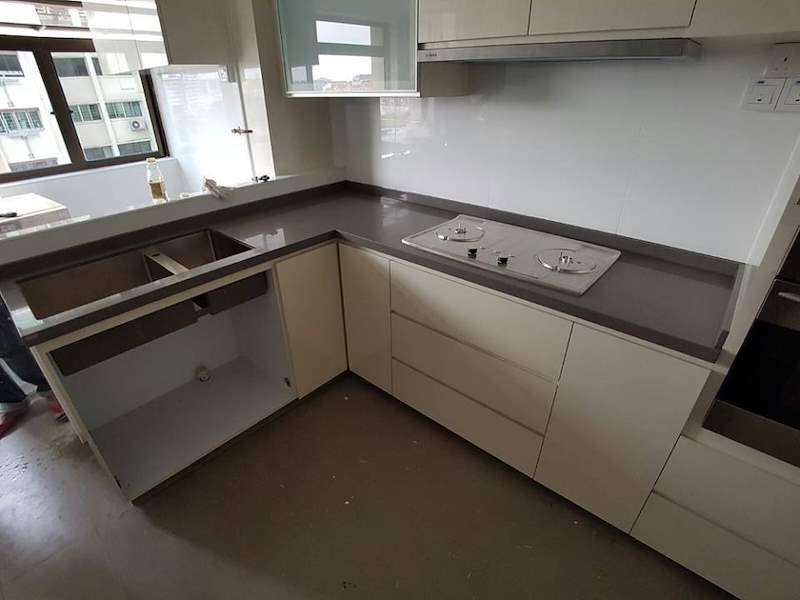
Most kitchen renovations start with one question: where does the hob go? In a flat with town gas, that single decision quietly settles three other things — who has to be on site, what can be hidden inside the carpentry, and whether the room next door can still be slept in.
It is also the third trade in the kitchen, after electrical and plumbing, where the licence your renovation contractor holds is not the licence that matters. Here is how it actually works in an HDB flat, taken from HDB's own renovation guidelines and EMA's published guidance.
A renovation licence is not a gas licence
We are Larry Contractors Pte Ltd, an HDB Licensed Renovation Contractor, licence HB-09-5667H. That licence covers renovation works in HDB flats. It does not authorise anybody here to alter a gas pipe.
HDB's technical terms and conditions for sanitary, plumbing and gas works are direct about it: for gas service works you have to engage an Energy Market Authority (EMA) licensed gas service worker. HDB's table of gas works then repeats the point line by line — gas pipe alteration works must be carried out by City Energy Pte Ltd or a Licensed Gas Service Worker, usually shortened to LGSW.
So a properly run kitchen with gas in it has a named gas worker on it, in the same way it has a licensed electrical worker and a PUB Licensed Plumber. The renovation contractor coordinates and builds around them. Nobody else touches the pipe — not the carpenter, not the plumber, and not a general worker who offers to "just extend it a bit" while the kitchen is open.
City Energy or an LGSW: which one you actually need
Town gas in Singapore is managed by City Energy, and both City Energy and licensed gas service workers appear in HDB's rules. They are not interchangeable. EMA's own FAQ draws the line:
- City Energy can only assist with installing exposed gas pipes in HDB premises, and with gas appliances in both HDB and private homes.
- For all other installation of gas pipes and appliances, you engage a Licensed Gas Service Worker.
- Relocating the gas meter is different again. HDB says that work must be carried out by City Energy, and it has to comply with the Singapore Civil Defence Force's guidelines.
After installation, EMA says City Energy fixes the gas meter and makes sure the appropriate tests are performed before turning the supply on. It then issues a Statement of Turn-on and a written statement certifying that the appliances have been tested and are safe for use. Keep both. They are the gas equivalent of an electrical completion record, and they are the first thing anybody will ask for if there is ever a question about that installation.
What HDB allows — and where people get caught
HDB states that the gas works in its list do not need a permit from HDB, but they are subject to its technical terms and conditions. "No permit" is easy to hear as "no rules". It is not.
Moving or extending the pipe to a new hob position
This is allowed, provided the alteration is done by City Energy or an LGSW. The rule is about who does it, not whether you may do it.
The riser pipe is not yours to touch
The gas riser pipes, including the riser branch pipe before your sub-meter, must not be tampered with. You may enclose the riser with lightweight non-combustible material, but HDB requires a fully ventilated removable access, 600mm wide and full height from ceiling to floor, for inspection and maintenance. If the pipe ever needs replacing in full, the enclosure has to come off at the flat owner's own cost.
That is a real constraint on kitchen carpentry. A tall cabinet built tight around the riser with a small hatch in it does not match that description. Design the enclosure as a removable full-height panel from the first drawing, not as something the carpenter has to rework on site.
No gas pipes in the common partition walls
HDB states that all gas pipes must not be embedded in the common partition walls. If the plan involves hiding a gas pipe, that is a conversation to have with the licensed gas worker before anything is chased, boxed or tiled over — and remember from EMA's line above that City Energy only does exposed pipes in HDB flats.
Switching to induction does not remove the pipe completely
Plenty of owners renovating an older flat decide to stop cooking on gas. HDB allows the gas branch pipe after the sub-meter to be removed, but a 100mm length of gas pipe protruding from the wall into the kitchen must be maintained and capped when not in use, and the removal must be done by City Energy or an LGSW.
Two practical consequences. First, the tiling and carpentry on that wall have to allow for a capped stub sticking out of it — plan a cut-out or a cabinet back panel for it, rather than finding out when a tall unit will not sit flush. Second, that stub is what lets the next owner go back to gas without a fight.
And do not forget the other side of the switch: an induction hob is an electrical load. Whether the flat's supply is adequate for it is a question for your licensed electrical worker, asked before the kitchen is designed.
Gas water heaters and gas ovens
Installing either needs an LGSW and has to comply with City Energy's requirements. If you are thinking of putting one outdoors, HDB says outdoor installation is subject to HDB's approval.
The bedroom rule nobody asks about
This is the one that turns up after the layout has already been drawn.
HDB does not allow gas pipe termination or gas appliances in sleeping areas or bedrooms, and it states that space with gas pipes is not allowed to be converted into a bedroom. Where a kitchen with gas sits next to a space that is slept in, a full-height wall with a door must separate the two. HDB's own example is a 2-room Flexi or White flat where the flexible space is used as a sleeping area.
Where this bites in practice:
- A small flat opened up into one continuous kitchen, living and sleeping space.
- Part of the kitchen or the service yard turned into a helper's room or a study that someone will sleep in.
- An open kitchen plan that assumes a half-height partition or a glass screen is enough beside a sleeping area.
None of these is a finishing decision. They are layout decisions, so they belong in the first conversation, before a single carpentry drawing is approved.
Where gas fits in the renovation programme
Gas is a small part of the scope, but it sits in the middle of the sequence and everything after it depends on it:
- Decide gas or induction, and the hob position, before the kitchen is drawn. The worktop cut-out, the cabinet underneath and the hood position all follow from it.
- Alter the pipe while the kitchen is open — after hacking, before the cabinets go in.
- Install the carpentry around the final pipe route, including any removable riser panel and any capped stub.
- Connect the hob once the worktop is in, and make sure the testing and turn-on described above actually happen, with the paperwork handed to you.
Because we make our own carpentry, this order matters to us directly. A hob that moves after the cabinets have been fabricated is no longer a gas job — it is a carpentry remake, a new worktop cut-out and a delay. Fix the position first and that problem never arises.
Photograph the pipe route before the cabinets close over it. It takes a minute and it tells the next person exactly where the gas runs.
The questions to ask before you sign
- Is any gas pipe being altered, extended, removed or concealed in this scope — yes or no?
- If yes, who is doing it: City Energy, or a Licensed Gas Service Worker? What is their name and licence detail, in writing?
- Is the gas meter moving? If so, that is City Energy's job.
- If the riser is being boxed in, does the drawing show a fully ventilated, removable, full-height access 600mm wide?
- If I am switching to induction, where will the capped 100mm stub be, and have the tiling and carpentry allowed for it?
- Will anyone sleep in a space next to the gas pipes or appliances, and does the layout include a full-height wall with a door where HDB requires one?
- Who arranges the turn-on, and will I receive the Statement of Turn-on and the appliance testing statement?
None of these is an awkward question. A contractor who has read HDB's gas works table will answer all seven in a couple of minutes.
What you should be holding at the end
- The name and licence detail of whoever carried out the gas works — City Energy or the Licensed Gas Service Worker
- City Energy's Statement of Turn-on
- The written statement certifying the gas appliances were tested and are safe for use
- Your own photograph of the final pipe route before the carpentry closed over it
The rules above are HDB's, for HDB flats. Condominiums and landed homes are not covered by HDB's table — for those, check the MCST's by-laws and ask your licensed gas worker what applies. Guidelines change, so always confirm the current rules for your own flat with HDB and City Energy before work starts.
Related reading
Gas is one of the regulated trades in an HDB renovation that a renovation contractor's licence does not cover on its own. The others are electrical work and the Licensed Electrical Worker, water, waste and the PUB Licensed Plumber, and windows and the approved window contractor. If you are buying the hob yourself, read what supply-only really costs first; if you are planning to open the kitchen up, see the open-concept kitchen guide alongside the bedroom rule above.
If you are planning a kitchen and are not sure what the gas side of it involves, WhatsApp us on 9107 2601 — tell us the flat type and what you want to change, and we will tell you which parts are ours, which belong to a licensed gas worker or City Energy, and the order that avoids paying for the kitchen twice. Larry Contractors is an HDB Licensed Renovation Contractor, HB-09-5667H; you can read how we work on our HDB renovation and direct contractor pages.