
Landed Property Renovation Cost Guide Singapore 2026
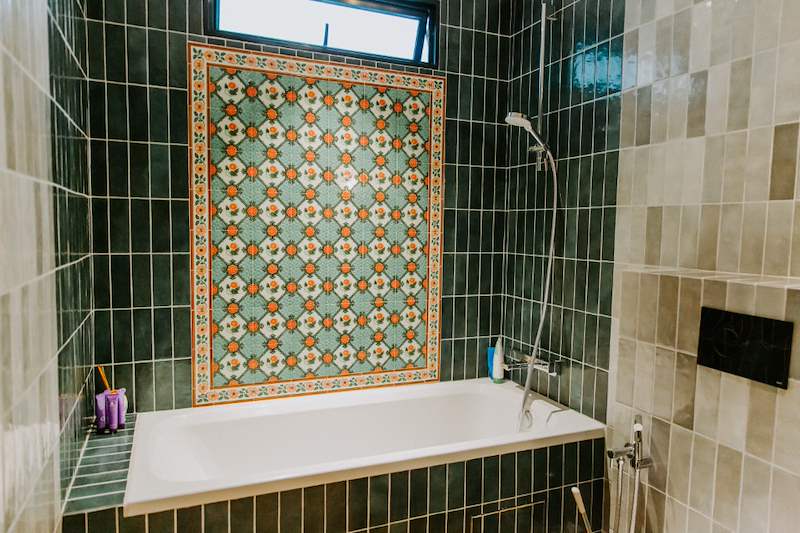
Landed property renovation costs in Singapore range from $80,000 to $500,000+ depending on house type and scope. A standard 2-storey terrace home full renovation averages $150,000–$250,000, semi-detached homes $200,000–$350,000, and bungalows $300,000–$500,000+. Expect $80–$180 per square foot for basic renovations, $180–$300 for mid-range, and $300+ for premium finishes. BCA approval required for Additions & Alterations (A&A) works affecting structure, and timeline typically runs 4–8 months from design to completion.
Landed Property Renovation Cost Breakdown by House Type
Landed properties vary dramatically in size and complexity, which directly impacts renovation budgets. Here's what you'll pay based on property type in 2026.
Terrace House Renovation Costs
Typical terrace houses in Singapore measure 1,500–2,500 sq ft across 2-3 storeys. A complete renovation including hacking, rewiring, replumbing, flooring, kitchen, bathrooms, carpentry, and painting runs $150,000–$250,000. Conservative renovations keeping existing layouts start around $80,000–$120,000, while premium renovations with imported materials and custom carpentry reach $300,000+.
Semi-Detached House Renovation Costs
Semi-detached properties typically span 2,500–4,000 sq ft. Full renovation budgets range $200,000–$350,000 for mid-range finishes. You're looking at $130,000–$180,000 for basic refreshes, and $400,000+ for luxury renovations with smart home systems, premium tiles, and extensive built-in carpentry. The larger floor area and often more complex layouts push costs higher than terrace homes.
Bungalow and Good Class Bungalow (GCB) Renovation Costs
Bungalows start at 3,500 sq ft and GCBs exceed 15,000 sq ft minimum land area. Standard bungalow renovations run $300,000–$500,000, while GCB projects easily exceed $800,000 to $2 million+. These properties often include pools, landscaping, multiple entertainment areas, wine cellars, and home theatres. Expect 20–30% of the budget for external works including driveways, gates, outdoor kitchens, and garden features.
Cost Per Square Foot Guide
| Renovation Tier | Cost Per Sq Ft | What's Included |
|---|---|---|
| Basic | $80–$130 | Essential repairs, builder-grade tiles, laminate, basic fittings, minimal carpentry |
| Standard | $130–$180 | Good quality tiles, engineered wood, modular kitchen, standard built-ins, proper lighting |
| Mid-Range | $180–$250 | Branded sanitaryware, quartz countertops, custom carpentry, feature walls, quality aircon |
| Premium | $250–$350 | Designer fittings, marble/engineered stone, extensive carpentry, smart home, wine fridge |
| Luxury | $350+ | Imported materials, bespoke furniture, home automation, AV systems, specialty lighting |
What Drives Landed Property Renovation Costs
Landed renovations cost more than HDB or condo projects for specific reasons. Understanding these factors helps you budget accurately and make informed trade-offs.
Structural and A&A Works
Unlike apartments, landed properties allow significant structural changes. Knocking down walls, adding extensions, building roof terraces, or adding storeys requires BCA-approved Additions & Alterations (A&A) plans from a qualified person (QP). Architectural and engineering fees run $8,000–$25,000 depending on complexity. Structural works themselves—steel beams, concrete reinforcement, foundation work—add $20,000–$80,000+ to budgets. A single-storey rear extension costs $80,000–$150,000 including approvals.
M&E and Plumbing Complexity
Landed properties have longer plumbing runs, more bathrooms (typically 3-6), and higher electrical loads. Complete rewiring for a terrace house runs $12,000–$20,000, semi-D $18,000–$28,000, bungalow $25,000–$45,000. Plumbing works including new stack pipes and waste lines cost $8,000–$18,000. Many landed homes upgrade to 3-phase electrical supply ($2,500–$4,000) to support multiple aircon systems, ovens, and water heaters simultaneously.
Kitchen and Bathroom Multiplication
Landed homes typically feature a main kitchen plus wet kitchen or yard kitchen, guest bathroom, multiple ensuite bathrooms, and powder rooms. Each kitchen costs $15,000–$45,000 depending on cabinetry and appliances. Bathrooms range from $8,000 for a basic powder room to $25,000+ for a master ensuite with separate shower, bathtub, and dual vanities. A 4-bathroom home allocates $40,000–$80,000 just for bathroom renovations.
Carpentry and Built-In Scope
Landed properties demand more wardrobes, storage, TV consoles, study desks, and display cabinets than apartments. Expect $35,000–$80,000 for carpentry in a terrace house, $50,000–$120,000 for semi-D, and $80,000–$200,000+ for bungalows. Our Kaki Bukit carpentry factory delivers cost advantages here—we manufacture our own cabinetry rather than outsourcing to third-party workshops, cutting costs by 15–25% versus competitors while maintaining quality control.
External and Outdoor Works
Outdoor spaces require budgets apartments don't. Driveway repaving costs $3,000–$8,000, automatic gates $3,500–$12,000, garden landscaping $5,000–$25,000+, outdoor kitchens $8,000–$20,000, and decking $120–$250 per sq metre. Pool renovations or new pool installation runs $40,000–$150,000. Façade repainting for a terrace house costs $5,000–$10,000, semi-D $8,000–$15,000. Budget 10–15% of total renovation for external works.
Landed Property Renovation Timeline and Process
Landed renovations take longer than apartments due to A&A approvals, larger scope, and coordination complexity. Here's the realistic timeline.
Pre-Construction Phase (6–12 Weeks)
Start with design and space planning. For projects requiring structural changes, your contractor engages a QP to prepare A&A plans. BCA approval takes 4–8 weeks after submission. Simultaneously, finalize material selections, electrical points, carpentry designs, and fixture choices. Sign the renovation contract and arrange for your 10% deposit. If neighbours share walls (terrace or semi-D), serve them notice under the Building Control Act before hacking.
Construction Phase (12–24 Weeks)
Demolition and hacking takes 1–2 weeks. Structural works and A&A take 2–4 weeks. First-fix M&E (concealed wiring, plumbing) runs 2–3 weeks, followed by masonry, plastering, and waterproofing (2–3 weeks). Tiling takes 2–4 weeks depending on area. Carpentry fabrication and installation requires 4–6 weeks. Painting needs 2 weeks including priming and multiple coats. Second-fix M&E, installing fixtures, and final touches take 1–2 weeks. Total construction for a terrace house: 3–4 months. Semi-D: 4–5 months. Bungalow: 5–8 months.
Managing Delays
Landed projects face specific delay risks. Custom carpentry from overseas workshops can lag 2–4 weeks—our in-house factory eliminates this. Imported tiles or stone may face shipping delays; order early and verify stock. Structural discoveries during hacking (rotted beams, termite damage, foundation issues) add 1–3 weeks for remedial work. Weather delays affect external works; schedule façade, roofing, and outdoor works during drier months (February–April, June–August). Always add 2–3 week buffer to timelines.
BCA Regulations and A&A Approval Requirements
Landed properties enjoy more renovation freedom than condos, but significant works still require approval. Here's what needs BCA clearance and what doesn't.
Works Requiring A&A Approval
You need BCA-approved plans for: structural alterations (removing or adding load-bearing walls, beams, columns), building extensions or additions, roof modifications or roof terraces, adding or removing storeys, changing façade appearance, excavation or underpinning work, and changes affecting party walls with neighbours. Your QP submits plans; approval takes 4–8 weeks and costs $8,000–$25,000 in professional fees plus $400–$2,000 in BCA submission fees.
Works Not Requiring Approval
Internal cosmetic works proceed without BCA approval: removing non-load-bearing partition walls, hacking floor tiles, repainting, replacing windows and doors (same size), installing built-in carpentry, rewiring and replumbing (same routes), replacing sanitary fixtures, and installing air-conditioning. However, always verify wall type before hacking—bring in your contractor or a structural engineer if uncertain.
URA Guidelines for Landed Properties
Beyond BCA, URA regulates landed property development. Gross Floor Area (GFA), site coverage, building height, and setback requirements depend on your land's zoning and designation. Conservation area properties face additional restrictions. GCBs have strict guidelines on GFA (maximum 35% of land area up to first 1,000 sqm), building height (2 storeys), and character retention. Always check your property's allowable development before planning extensions.
Smart Budget Allocation for Landed Renovations
How you distribute your budget impacts both outcomes and value. Here's the allocation strategy we recommend based on 500+ completed projects.
Recommended Budget Distribution
| Category | % of Budget | Notes |
|---|---|---|
| Hacking & Masonry | 8–12% | Foundation for everything; don't cut corners on waterproofing |
| M&E & Plumbing | 15–20% | Includes electrical, plumbing, aircon, lighting—invest properly |
| Carpentry & Built-ins | 20–28% | Largest visible impact; our factory advantage saves you here |
| Tiling & Flooring | 12–18% | Large areas in landed homes; mid-tier tiles offer best value |
| Kitchen & Appliances | 10–15% | Multiple kitchens in landed homes push this higher |
| Bathrooms & Sanitary | 10–15% | 3-6 bathrooms typical; powder rooms can be simpler |
| Painting & Finishing | 5–8% | Large surface area but relatively cost-effective |
| External & Outdoor | 8–12% | Gates, driveways, landscaping—unique to landed |
| Contingency | 10% | For unforeseen issues: termites, rot, hidden damage |
Where to Invest for Maximum Impact
Prioritize kitchens and master bathrooms—these spaces see daily use and influence resale value most. Quality flooring throughout creates visual coherence; engineered wood or good homogeneous tiles deliver durability at reasonable cost. Invest in proper lighting design including dimming, layered lighting, and outdoor lighting for security and aesthetics. Smart home prewiring costs little during renovation but expensive to retrofit—add it now even if not immediately activating all functions.
Where to Save Without Compromise
Powder rooms and guest bathrooms don't need premium fixtures—good mid-tier sanitaryware looks identical. Secondary bedrooms need functional wardrobes, not custom display pieces. Use builder-grade tiles in storerooms, yard areas, and utility spaces. Skip designer switches and sockets except in visible areas. Paint is cheap; elaborate feature walls using expensive materials give diminishing returns. Our direct contractor model eliminates designer markups (typically 25–40% on materials and 20–30% project management fees), saving $30,000–$80,000 on typical landed projects versus design-and-build firms.
Frequently Asked Questions
Do I need an architect for landed property renovation?
Only if you're doing structural works requiring BCA approval—then you need a Qualified Person (QP), typically an architect or engineer, to prepare and submit A&A plans. For cosmetic renovations without structural changes, you don't need an architect; a good contractor handles design, space planning, and execution. We work with trusted QPs when projects require A&A approval and coordinate the entire process including submissions.
How much does it cost to add one storey to a terrace house?
Adding a full third storey to a 2-storey terrace costs $180,000–$350,000 including structural works, QP fees, BCA approval, building the new level, roofing, staircase, and finishing. This assumes your land zoning permits the additional height and you don't exceed allowable GFA. Foundation strengthening may add $20,000–$40,000 if existing structure can't support additional load. Timeline: 6–9 months total.
Can I stay in my landed property during renovation?
Possible but uncomfortable, especially during hacking, M&E works, and painting phases due to dust, noise, and fumes. If renovating floor-by-floor, some homeowners occupy one level while working on others, but this extends timeline by 2–4 weeks due to access constraints. Most landed homeowners move out entirely for the 3–6 month construction period. If staying, seal off work areas, expect daily disruption 8am–6pm, and plan for occasional water/power shutdowns.
What's the difference between renovation cost for freehold vs leasehold landed property?
No difference in renovation costs—freehold vs leasehold is a property tenure issue, not a construction one. Both follow identical BCA regulations, use the same materials, and require the same labour. However, investment strategy differs: owners of older leasehold landed properties (under 40 years remaining) might opt for basic renovations ($80–$120 per sq ft) rather than premium ($250+) since resale value appreciation is limited by lease decay.
Do landed property renovations require MCST approval like condos?
No. Landed properties don't have Management Corporations (MCSTs). You own the land and building outright, giving you more freedom. You still need BCA approval for structural works and must comply with URA guidelines, but there's no MCST to approve cosmetic changes, no management office to coordinate with, and no restrictions on renovation hours beyond standard NEA noise regulations (no noisy works before 8am weekdays, before 9am Saturdays, or on Sundays and public holidays without permit).
Why Choose Larry Contractors for Your Landed Renovation
We've completed 500+ renovation projects since 2009, including extensive landed property work across terrace houses, semi-detached homes, and bungalows island-wide. As a direct contractor, you deal with us from quotation through completion—no middleman, no designer markups, no coordination delays. Our HDB license (HB-09-5667H) and BCA GB2 grading demonstrate our track record and capabilities. Most importantly, our carpentry factory at 19 Kaki Bukit Industrial Terrace means we fabricate your wardrobes, kitchen cabinets, and built-ins in-house with full quality control, delivering 15–25% cost savings versus contractors outsourcing to third-party workshops. Transparent quotations, itemised pricing, and direct accountability. Get your landed property renovation quote today via WhatsApp at https://wa.me/6591072601—send us your floor plan and requirements, and we'll provide a detailed breakdown within 48 hours.
Also worth reading: how much it costs to rebuild a semi-detached house.