
How to Save Money on HDB Renovation Without Sacrificing Quality
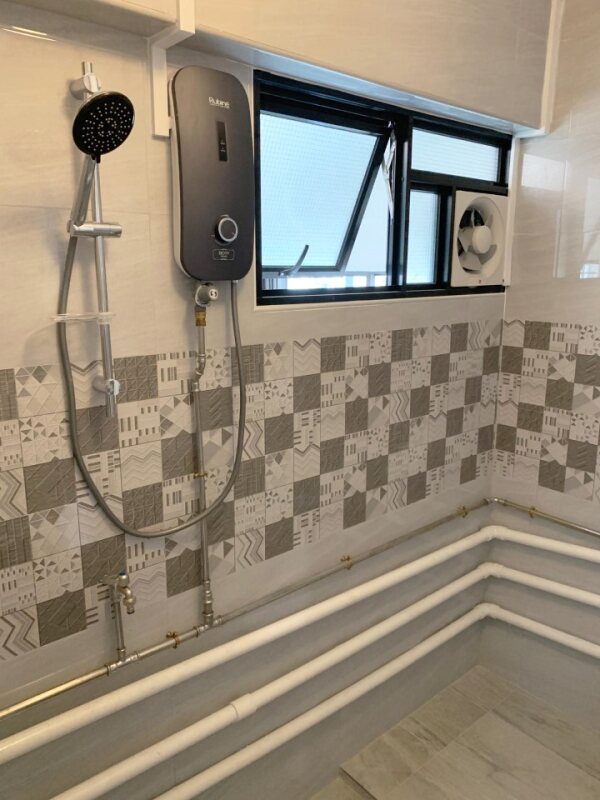
You can save 20-40% on your HDB renovation by engaging a direct contractor instead of interior designers, choosing materials wisely, and timing your project right. A typical 4-room HDB renovation costs $35,000-$55,000 through direct contractors versus $50,000-$80,000 through design firms. Focus your budget on built-in carpentry and hacking works—the permanent changes—while keeping finishes like paint and flooring modest. Avoid unnecessary false ceilings, over-elaborate feature walls, and full-height cabinets you won't use.
Engage Direct Contractors, Not Interior Design Firms
The single biggest money-saver is cutting out the middleman. Interior design firms typically mark up contractor costs by 30-50% for project management and design services. As a licensed HDB contractor, we quote you actual build costs without layering fees.
The Cost Difference
| HDB Flat Type | Direct Contractor Range | ID Firm Range | Potential Savings |
|---|---|---|---|
| 3-room (60-65 sqm) | $25,000 - $40,000 | $38,000 - $60,000 | $13,000 - $20,000 |
| 4-room (90 sqm) | $35,000 - $55,000 | $50,000 - $80,000 | $15,000 - $25,000 |
| 5-room (110 sqm) | $45,000 - $70,000 | $65,000 - $100,000 | $20,000 - $30,000 |
| Executive (130 sqm) | $55,000 - $85,000 | $80,000 - $120,000 | $25,000 - $35,000 |
What You Give Up (and What You Don't)
Going direct means no 3D renderings or elaborate mood boards. You'll work from floor plans, material samples, and reference photos. For most homeowners, this is perfectly adequate—you still get custom carpentry built to your exact measurements, professional hacking and tiling, and electrical rewiring. You just coordinate the decisions yourself instead of paying someone $8,000-$15,000 to do it for you.
Look for contractors with their own carpentry factory. We manufacture all our cabinets, wardrobes, and built-ins at our Kaki Bukit facility, which eliminates outsourcing markup and gives us full quality control. Contractors who subcontract carpentry add another 25-35% to those costs.
Prioritise Structural and Built-In Works
Spend your budget on what's difficult or impossible to change later. Hacking walls, building new partitions, relocating plumbing, rewiring electrical points, and installing built-in carpentry are the foundation of your renovation. Finishes like paint colour, flooring type, and light fixtures are easy to swap in 5-10 years.
High-Value Investments
- Custom carpentry: Built-in wardrobes, kitchen cabinets, shoe cabinets, TV consoles. These maximise your HDB's limited space and are tailored to odd corners and ceiling heights. Budget $1,200-$1,800 per linear metre for floor-to-ceiling storage in plywood with laminate finish.
- Hacking and masonry: Removing the wall between kitchen and bomb shelter, creating an open-concept layout, or building a study nook. Hacking costs $8-$15 per square foot depending on wall thickness; new partition walls run $12-$18 per square foot including plastering.
- Electrical rewiring: Adding power points for appliances, moving light switches, installing ceiling fan brackets. Each new point costs $80-$150 including wiring and DB board connection. Do this now—hacking walls later to add wiring is expensive.
- Plumbing relocation: Moving your kitchen sink, adding a bathroom basin, or installing a washer tap. Repositioning a sink costs $300-$600; adding a new tap point runs $180-$350 depending on pipe routing.
Low-Value Expenses to Minimise
- False ceilings: Unless you need to hide extensive ducting or downlights, skip the full false ceiling. A simple L-box around the perimeter costs $8-$12 per foot versus $15-$25 per square foot for a full drop ceiling. Save $2,500-$4,500 in a 4-room flat.
- Feature walls: Accent wallpaper or paint ($150-$400) delivers the same visual impact as marble slabs ($1,200-$2,800) or 3D wall panels ($800-$1,500). Choose the former.
- Designer lighting: A $1,800 chandelier doesn't light your room better than three $180 pendant lights. Spend the $1,400 difference on an extra wardrobe instead.
- Premium flooring in bedrooms: Vinyl planks ($3-$6 per sqft installed) wear just as well as engineered wood ($8-$15 per sqft) in low-traffic bedrooms. Reserve timber flooring for living and dining areas if you love the look.
Choose Materials Strategically
The gap between budget and premium materials is often more about branding than durability. Know where to save and where to spend.
Carpentry: Plywood Core, Laminate Finish
Standard plywood carcasses with laminate surfaces last 15-20 years in Singapore's humidity, cost $1,200-$1,600 per linear metre, and offer thousands of colours and textures. Solid wood or veneer finishes run $2,000-$3,500 per linear metre but require more maintenance and are prone to warping without climate control.
For kitchen cabinets, upgrade to moisture-resistant plywood (MR-grade) at $1,400-$1,800 per linear metre. The $200-$300 premium per metre prevents swelling near the sink. Bedroom wardrobes can use standard plywood without issue.
Tiles: Mid-Range Porcelain Over Imported Marble
Homogeneous tiles (full-body porcelain) at $4-$8 per square foot installed are nearly indestructible, stain-resistant, and available in marble-look finishes. Actual imported marble or large-format Italian porcelain tiles cost $15-$35 per square foot but offer no functional advantage in an HDB flat. For a 90 sqm flat with 60 sqm of tiled flooring, that's a $6,600-$16,200 saving.
Spend a bit more on non-slip bathroom floor tiles ($5-$9 per sqft) for safety. Save on bedroom and living room floors by using vinyl ($3-$6 per sqft installed)—it's warmer underfoot, quieter, and faster to install.
Doors: Solid Laminate Over Solid Wood
A solid laminate bedroom door costs $350-$550 installed, resists warping, and requires zero maintenance. Solid timber doors run $800-$1,500 each and need periodic treatment in Singapore's humidity. For four bedroom doors, you save $1,800-$3,800 with no practical downside.
Paint: Nippon or Dulux Over Premium Brands
Nippon Odour-Less and Dulux Wash & Wear cost $1.80-$2.50 per square foot for two coats including prep. Premium brands charge $3.50-$5.50 per square foot for similar coverage and washability. In a 4-room HDB with 350 sqm of wall area, that's a $2,500-$4,000 saving. Both last 5-7 years before repainting.
Time Your Renovation to Save on Costs
Contractor availability and material costs fluctuate throughout the year. Smart timing can shave 8-15% off your total bill.
Avoid Peak Periods
BTO key collections create renovation demand spikes. When 800-1,200 units in a single BTO project collect keys in the same month, contractors are fully booked and less likely to negotiate. Peak months are typically February-March and August-September following major BTO completions in mature estates.
Book your contractor 2-3 months before key collection during off-peak periods (April-June, October-November). We can allocate more time to your project and often offer 5-10% better rates when our schedule isn't packed.
Leverage Material Sales
Tile distributors and lighting retailers run clearance sales in June and December. If your timeline allows, select tiles and fixtures during these periods. Discontinued tile patterns sell at 30-50% off—they're not defective, just making way for new designs. A 4-room flat needs about 50-70 sqm of tiles; buying at clearance saves $1,200-$2,800.
Allow Flexible Timelines
If you're not in a rush to move in, tell your contractor you have flexibility. We can slot your project into gaps between fixed-deadline jobs, smoothing out our workflow. In return, we pass 8-12% savings to you. A $50,000 renovation becomes $44,000-$46,000 just by allowing an extra 2-3 weeks for completion.
DIY the Right Tasks, Outsource the Rest
Some jobs are simple enough to handle yourself, saving $500-$2,000 in labour. Others require licenses and HDB permits—don't attempt those.
Safe DIY Tasks
- Painting: If you have time and patience, painting walls yourself saves $1.50-$2.00 per square foot in labour. For 350 sqm of walls, that's $5,250-$7,000. Buy paint and rollers for $400-$600. Just ensure proper surface prep—wash walls, fill cracks, sand smooth—or the finish will look amateur.
- Installing curtain rods and blinds: Straightforward with a drill and level. Professional installation costs $50-$120 per window; doing six windows yourself saves $300-$720.
- Assembling loose furniture: IKEA cabinets, shelving units, bed frames. Save the $80-$150 per item assembly fee.
- Mounting mirrors and artwork: Use appropriate wall plugs and you'll get the same result as a handyman charging $60-$100 per hour.
Never DIY These
- Electrical works: All wiring, DB board modifications, and power point installation must be done by a licensed electrician and inspected. DIY electrical work violates HDB regulations and voids your home insurance.
- Plumbing alterations: Moving pipes, installing new taps, and waterproofing require proper sealing to prevent leaks into units below. One leak can cost $3,000-$8,000 in repairs and neighbour compensation.
- Hacking walls: You need HDB approval to hack any wall, and contractors must verify it's non-structural. Hacking the wrong wall compromises your block's integrity and leads to HDB fines up to $5,000.
- Built-in carpentry: Unless you own a workshop and professional tools, custom cabinets are beyond DIY scope. Poor measurements waste materials; a single floor-to-ceiling wardrobe uses $800-$1,200 in plywood and hardware.
Get Multiple Quotes and Negotiate Transparently
Shopping around is standard practice. Aim for three quotes from licensed HDB contractors—not ten, which wastes everyone's time and doesn't improve your decision quality.
What to Compare in Quotes
Don't just look at the bottom-line figure. Check itemised costs for carpentry (per linear metre or per item), hacking (per square foot), tiling (per square foot including material or labour-only), electrical (per point), and plumbing (per fitting). A $42,000 quote with premium materials may represent worse value than a $45,000 quote with better workmanship and project management.
Ask what's included: demolition and debris removal ($800-$1,500), post-renovation cleaning ($250-$500), touch-up visits after move-in. Some contractors quote low then charge these as extras.
Negotiate Honestly
If you have competing quotes, tell us. We'd rather match a fair price than lose the project. But don't invent fictitious low quotes to squeeze us—experienced contractors know market rates and will walk away from unrealistic expectations. Transparent negotiation builds trust and often gets you better after-sales support.
Ask about package deals. Bundling a full-flat renovation (hacking, carpentry, tiling, electrical, plumbing, painting) often yields 10-15% better rates than engaging separate contractors for each trade. We discount package jobs because coordination is simpler and material purchasing is more efficient.
Frequently Asked Questions
Can I use cheaper non-HDB-licensed contractors for my flat?
No. HDB requires all contractors working in HDB flats to hold a valid HDB licence. Unlicensed contractors cannot apply for renovation permits, and if HDB discovers unauthorised works, you'll be fined $5,000-$10,000 and forced to reinstate or hire a licensed contractor to certify the works. Always verify the contractor's HDB licence number—ours is HB-09-5667H.
How much should I budget for a 4-room HDB renovation?
For a moderate renovation including hacking one wall, full-flat repainting, kitchen and bedroom carpentry, and new flooring, budget $35,000-$55,000 through a direct contractor. If you want extensive built-ins, hacking multiple walls, or premium finishes, expect $55,000-$75,000. Basic cosmetic updates (paint, vinyl flooring, minor carpentry) run $18,000-$28,000.
Is it worth upgrading to premium materials for resale value?
Not usually. HDB resale buyers care most about location, remaining lease, and layout. A flat with solid laminate doors and homogeneous tiles sells just as well as one with solid timber doors and imported marble—buyers repaint and renovate to their own taste anyway. Invest in smart space planning and quality workmanship, not expensive finishes you won't recoup.
Can I save money by doing renovation in phases?
You'll actually spend more. Mobilisation costs (tools, equipment, debris disposal, permit applications) apply each time contractors start work. Doing carpentry now and tiling six months later means paying mobilisation twice, plus potential damage to new carpentry during later hacking or tiling. Complete all messy works (hacking, tiling, electrical, plumbing) in one go, then add loose furniture and décor over time.
What's the best way to reduce carpentry costs?
Build only what you'll actually use. Many homeowners install full-height cabinets in every bedroom, then leave upper shelves empty for years. A standard 2.4-metre-high wardrobe stores as much as most families need at $1,200-$1,600 per linear metre versus $1,600-$2,200 for floor-to-ceiling. Eliminate decorative carpentry like display niches and TV feature panels—they add $800-$2,500 but serve no storage function.
Work With a Direct Contractor Who Controls Quality
Saving money doesn't mean compromising on workmanship—it means eliminating unnecessary markups and focusing your budget where it matters. At Larry Contractors, we've completed over 500 HDB renovations since 2009 with transparent pricing, our own carpentry factory for quality control, and no middleman fees. Whether you're renovating a resale flat or a fresh BTO, we'll help you maximise every dollar without cutting corners on the builds that last. Get a detailed, itemised quote with no obligation—message us on WhatsApp at https://wa.me/6591072601 and tell us about your flat. We'll walk you through where to save and where to invest for a renovation you'll love for the next 10-15 years.